

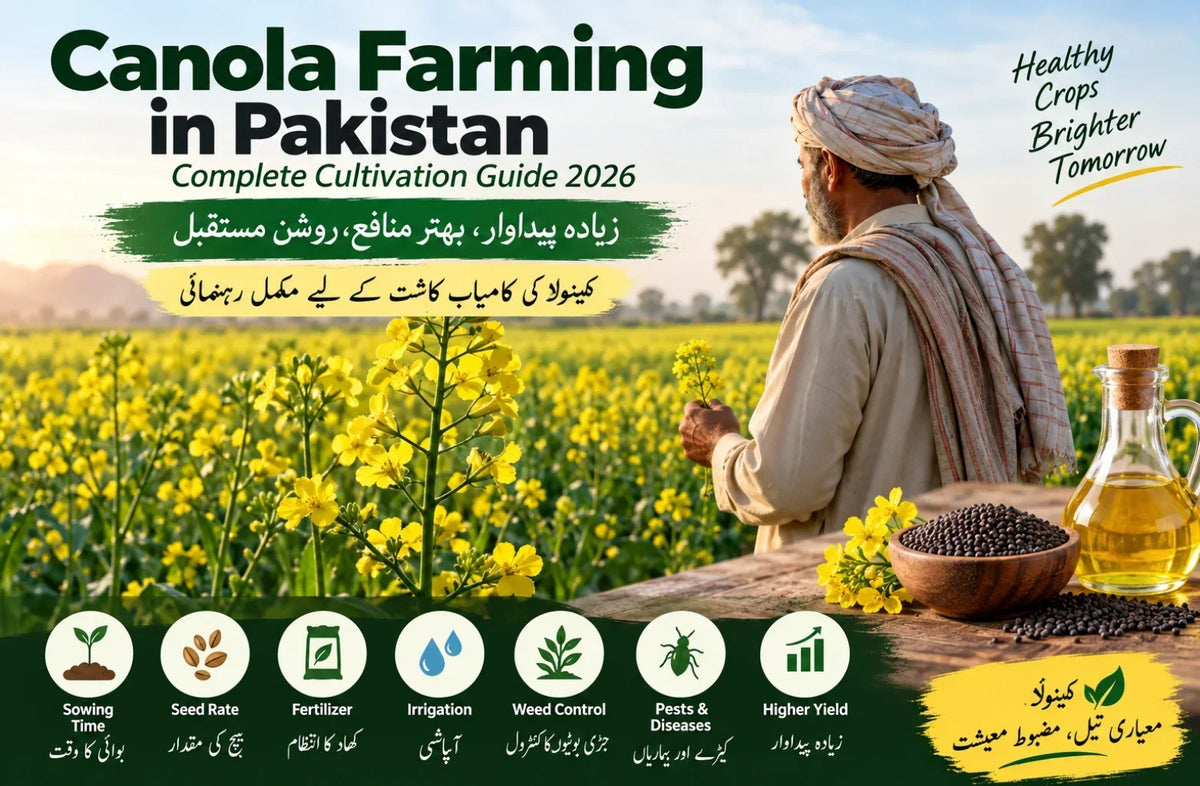
Canola Farming Guide
Canola farming in Pakistan can be an important option for farmers who want to grow an oilseed crop during the Rabi season. Good canola production, however, depends on much more than selecting a high-yielding seed. Farmers need to choose a variety suited to their area, sow it at the right time, establish a healthy plant population, manage fertilizer and moisture according to field conditions, control weeds early, monitor aphids and diseases, and harvest the crop at the correct maturity stage.
One important point farmers should understand is that there is no single sowing date, seed rate, fertilizer dose, irrigation schedule or yield figure that applies to every canola field in Pakistan. Recommendations change according to variety, region, soil type, rainfall, irrigation availability and crop condition.
Quick Guide for Farmers
Sowing: Many important Punjab canola varieties are recommended from late September through October, but the exact window is variety-specific. Seed rate: Around 2 kg/acre is listed for line sowing for several varieties, while broadcast sowing may require more seed. Important stages: crop establishment, flowering, pod development, seed filling and timely harvesting.
What You Will Learn in This Canola Farming Guide
- Canola Basics: What canola is and how it differs from general rapeseed and mustard.
- Sowing Time: When canola should be planted in Pakistan.
- Variety Selection: How farmers should select a suitable variety.
- Seed Rate: How much canola seed may be required per acre.
- Land Preparation: How to prepare a suitable seedbed.
- Sowing Method: Row spacing, plant spacing and seed depth.
- Crop Nutrition: Important nutrients for canola growth and yield.
- Irrigation: Which crop stages require careful moisture management.
- Weed Control: Why early weed competition should be avoided.
- Pests and Diseases: Important problems including aphids and fungal diseases.
- Yield: What determines canola yield per acre.
- Harvesting: How to judge maturity and reduce seed-shattering losses.
1. What Is Canola?
Canola belongs to the rapeseed and mustard group of oilseed crops, but every rapeseed or mustard variety is not automatically considered canola.
According to the Agriculture Department Punjab, rapeseed and mustard varieties or hybrids are classified as canola quality when the oil contains less than 2% erucic acid and the oil-free meal contains less than 30 micromoles of glucosinolates per gram.
This difference is important because terms such as canola, raya, mustard and sarson are sometimes used interchangeably by farmers, even though their varieties and oil-quality characteristics may differ.
2. Where Can Canola Be Grown?
Canola and related rapeseed-mustard crops are grown under both irrigated and rainfed conditions in Pakistan.
In Punjab, official canola varieties are available for different production zones, including:
- Irrigated Punjab
- Rainfed or Barani Punjab
- Central Punjab
- Northern Punjab
- Southern production areas where suitable varieties are recommended
Canola is also grown in Khyber Pakhtunkhwa, where Agriculture Extension lists several canola varieties and hybrids for farmer production.
Before purchasing seed, always check whether the variety is recommended for your region, sowing date and production system.
3. Best Canola Sowing Time in Pakistan
Canola sowing time in Pakistan is one of the most important management decisions because planting date affects crop establishment, vegetative development, flowering, pod formation and the conditions faced by the crop during maturity.
There is no single planting date for all canola varieties.
Punjab Agriculture lists the following official sowing windows for several important canola varieties:
| Canola Variety | Recommended Sowing Window | Recommended Area |
|---|---|---|
| TM Canola | 1–15 October | Irrigated and rainfed Punjab |
| Khanpur Canola | 1–15 October | Irrigated and rainfed Punjab |
| Rachna Canola | 1–15 October | Irrigated and rainfed Punjab |
| Sandal Canola | 1–15 October | Irrigated and rainfed Punjab |
| Super Canola | 1–31 October | Irrigated central and northern Punjab |
| Barani Canola | 25 September–15 October | Barani areas of Punjab |
This table also shows why farmers should not simply follow the advice that “all canola must be planted on one particular October date.” The correct sowing window depends on the variety.
4. Why Timely Canola Sowing Matters
Correct planting time helps the crop pass through its important growth stages under more favorable weather conditions.
Very late or unsuitable planting can affect:
- Initial crop establishment
- Branch development
- Flowering
- Pod formation
- Seed filling
- Final maturity
Farmers should therefore select the variety and expected planting date together rather than buying seed first and deciding the sowing date later.
5. How to Select the Right Canola Variety
Farmers frequently search for the best canola variety in Pakistan, but there is no one variety that should be labelled best for every farmer.
Consider the following factors:
- Recommended Region: Check whether the variety is recommended for your production area.
- Sowing Window: Select seed that matches your actual expected planting date.
- Irrigated or Rainfed: Variety selection should reflect water availability.
- Crop Duration: Consider how canola fits into your crop rotation.
- Lodging Tolerance: Lodging can make crop management and harvesting difficult.
- Drought and Heat Tolerance: These characteristics may be useful in moisture- or heat-stressed areas.
- Pod-Shattering Behaviour: Excessive shattering can increase harvest losses.
- Seed Source: Buy genuine seed from a reliable supplier.
6. Prepare a Suitable Seedbed for Canola
Canola is a small-seeded crop, so good seed-to-soil contact and suitable planting depth are important for uniform emergence.
Before sowing:
- Prepare a reasonably fine and level seedbed.
- Break large soil clods where necessary.
- Remove or manage major weeds.
- Make sure the field has suitable moisture for sowing.
- Provide drainage so irrigation or rainfall does not remain standing for long periods.
Do not overwork soil when it is excessively wet because this can damage soil structure.
7. Canola Seed Rate Per Acre
The canola seed rate per acre depends on the variety, germination percentage, seed size, sowing method and target plant population.
Khyber Pakhtunkhwa Agriculture Extension lists the following seed rates for several canola varieties:
- Line Sowing: Approximately 2 kg seed per acre
- Broadcast Sowing: Approximately 3 kg seed per acre
Some hybrid entries on the same official source are also listed around 2 kg per acre.
These should be treated as practical general guidance rather than a compulsory rate for every commercial hybrid.
Farmer Tip: If the seed company's current label gives a variety- or hybrid-specific seed rate, follow that recommendation instead of automatically increasing the seed quantity.
8. Line Sowing vs Broadcasting Canola
Broadcasting is used in some farming systems, but line or drill sowing offers important management advantages.
Proper line sowing can help farmers:
- Maintain a more uniform crop stand
- Control seed depth more accurately
- Manage plant population
- Carry out intercultural operations more easily
- Monitor weeds and crop problems more effectively
Recent agronomic guidance for drill-sown canola gives a general range of approximately:
- Row-to-Row Spacing: 30–40 cm
- Plant-to-Plant Spacing: 8–12 cm
- Seed Depth: 2–3 cm
These are general agronomic ranges and should be adjusted according to variety, soil type, location and sowing system.
9. How Deep Should Canola Seed Be Sown?
Because canola seed is small, it should normally be placed relatively shallow.
A general working range is approximately 2–3 cm deep under suitable soil conditions.
Very deep sowing may delay emergence and make it harder for small seedlings to reach the soil surface.
Actual placement should also consider:
- Soil texture
- Moisture availability
- Surface crusting risk
- Seedbed condition
10. Check Crop Establishment After Emergence
Once canola seedlings emerge, farmers should walk through the field rather than assuming germination has been successful everywhere.
Check for:
- Missing plants
- Uneven germination
- Overcrowded patches
- Waterlogged sections
- Early weeds
- Seedling damage
- Weak or yellow seedlings
The objective is a reasonably uniform and healthy crop stand—not simply the highest possible number of plants.
11. Important Nutrients for Canola
Canola requires balanced nutrition, but farmers should avoid using one fixed fertilizer dose for every field.
The correct fertilizer program depends on:
- Soil fertility
- Soil test results
- Previous crop
- Available irrigation or rainfall
- Variety
- Yield target
- Previous fertilizer applications
Nitrogen
Nitrogen supports vegetative growth, leaf development and branching. A healthy canopy helps the crop support later flowering, pod formation and seed development.
Phosphorus
Phosphorus is important for early root development and crop establishment.
Potassium
Potassium supports several plant functions including water regulation and general crop strength. Whether additional potassium is required should depend on soil fertility.
Sulphur
Sulphur is an important nutrient for oilseed crops including canola. Its requirement should be considered when soil sulphur is insufficient.
Boron and Zinc
Pakistani research has shown that boron and zinc can influence canola growth, yield and quality under deficient conditions.
However, micronutrients should not be applied blindly. They should be used according to actual crop and soil requirements.
12. Do Not Copy One Fertilizer Dose for Every Canola Field
A fertilizer program that performs well on one farm may not be suitable for another because soil nutrient status can differ significantly.
A better approach is to:
- Use soil-test information where available.
- Consider the previous crop.
- Follow current local recommendations.
- Use the specific variety or hybrid guidance where available.
- Observe crop development rather than applying nutrients only by calendar date.
This pillar guide therefore does not recommend one universal number of fertilizer bags per acre.
13. Canola Irrigation Management
There is no single fixed irrigation schedule suitable for every canola field.
Irrigation requirement depends on:
- Soil type
- Rainfall
- Available soil moisture
- Temperature
- Crop stage
- Production region
Important stages where farmers should pay particular attention to moisture include:
- Crop Establishment: Young seedlings need suitable moisture to establish evenly.
- Flowering: Severe moisture stress can affect reproductive development.
- Pod Formation: Developing pods need adequate crop moisture.
- Seed Filling: Severe stress may limit final seed development.
Do not continue unnecessary irrigation where the root zone already contains sufficient moisture, and avoid prolonged waterlogging.
14. Manage Weeds Early in Canola
Early weed competition can reduce access to water, nutrients, sunlight and growing space.
Important weed-management principles include:
- Begin with a reasonably clean field.
- Inspect the crop soon after establishment.
- Control problem weeds before they become large.
- Use line sowing where practical to simplify field management.
- Correctly identify the weed before selecting a herbicide.
If chemical weed control is required, use a product registered for canola and follow its current label. Do not copy herbicide doses from unrelated crops or another farmer's tank.
15. Aphids in Canola
Aphids are among the important insect pests associated with canola production in Pakistan.
They feed by sucking plant sap and can become damaging when populations increase significantly.
Regularly inspect:
- Growing shoots
- Flowering branches
- Developing pods
- Field edges
Khyber Pakhtunkhwa Agriculture Extension also lists mustard sawfly and armyworm among pests associated with canola.
Do not spray only because a small number of insects are present. Pest-management decisions should consider crop stage, pest population, local recommendations and the current pesticide label.
16. Important Canola Diseases
Pakistan-focused extension information lists several fungal diseases associated with canola, including:
- Blackleg
- White Rust
- Root Rot
- Downy Mildew
- Alternaria Black Spot
Correct diagnosis is important before selecting a fungicide because nutrient deficiency, waterlogging, herbicide injury and disease can sometimes produce similar-looking symptoms.
Useful preventive practices include:
- Use healthy seed.
- Avoid prolonged waterlogging.
- Maintain reasonable crop sanitation.
- Observe the crop regularly.
- Use registered crop-protection products only where required.
17. Manage Canola Carefully During Flowering and Pod Development
Flowering and pod development are important stages because the crop is forming the structures that will ultimately contribute to seed yield.
During this period:
- Watch soil moisture carefully.
- Monitor aphids and other insects.
- Inspect leaves and pods for disease symptoms.
- Avoid severe weed competition.
- Avoid unnecessary pesticide applications.
- Follow label precautions for any product used during flowering.
18. How Long Does a Canola Crop Take to Mature?
Canola crop duration is variety-specific. Farmers should not assume that every canola crop matures after the same number of days.
For example, Punjab Agriculture describes TM Canola as a short-duration variety of approximately 130 days.
Other varieties and commercial hybrids may differ, so farmers should check the maturity information provided for the exact seed they are growing.
Temperature, planting date and field conditions can also influence how quickly the crop reaches maturity.
19. Canola Yield Per Acre in Pakistan
Canola yield per acre depends on genetics and management. Variety, sowing time, plant population, soil fertility, moisture, weeds, pests, diseases and harvesting losses can all change final production.
Punjab Agriculture lists the following yield potentials for selected canola varieties:
| Variety | Official Yield Potential |
|---|---|
| TM Canola | 33 maunds/acre |
| Khanpur Canola | 36 maunds/acre |
| Rachna Canola | 35.90 maunds/acre |
| Sandal Canola | 36.10 maunds/acre |
| Super Canola | 36.31 maunds/acre |
| Barani Canola | 33 maunds/acre |
These figures are yield potentials, not guaranteed farm yields.
A farmer should not assume that buying a variety with a 36-maund potential automatically means the field will produce 36 maunds per acre. Actual production depends on the complete crop-management system and seasonal conditions.
20. How Can Farmers Improve Canola Yield?
- Select a Suitable Variety: Match the variety with your region and production system.
- Sow Within the Recommended Window: Avoid unnecessary planting delays.
- Use Genuine Seed: Start with healthy seed from a reliable source.
- Use the Correct Seed Rate: Avoid both very thin and excessively dense crop stands.
- Control Seed Depth: Small seed should not be buried too deeply.
- Maintain a Uniform Stand: Check crop establishment after emergence.
- Use Balanced Nutrition: Apply nutrients according to soil and crop needs.
- Manage Moisture: Avoid severe stress during important reproductive stages.
- Control Weeds Early: Reduce competition before weeds become difficult to manage.
- Monitor Aphids: Inspect the crop regularly rather than waiting for severe infestation.
- Diagnose Diseases Correctly: Avoid unnecessary fungicide use.
- Harvest at the Correct Stage: Reduce both immature-seed and shattering losses.
21. When Is Canola Ready for Harvest?
Canola maturity should be judged by inspecting the seed inside the pods, not only by looking at external pod color.
As seeds mature:
- They become firmer.
- Green seed begins changing toward its mature color.
- Maturity generally progresses from lower pods upward.
- Dry mature pods become increasingly susceptible to shattering.
Seed color change is therefore a useful maturity indicator.
Harvest timing also depends on whether the crop will be swathed or harvested directly and on the pod-shattering characteristics of the variety.
Farmers should inspect plants from several parts of the field because maturity can be uneven.
22. Why Late Harvesting Can Cause Losses
Allowing fully mature canola to remain in the field for too long can increase the risk of pods opening and dropping seed.
Shattering risk can differ according to:
- Variety
- Wind
- Dry weather
- Uneven maturity
- Harvesting method
The objective is to allow adequate seed maturity without delaying harvesting so long that avoidable seed losses increase.
23. Common Canola Farming Mistakes
- Choosing Seed Only for Yield Claims: Regional suitability and sowing window are equally important.
- Sowing Too Late: Delayed planting can disturb the crop's complete growth cycle.
- Using Excess Seed: More plants do not automatically mean more yield.
- Sowing Too Deep: Deep placement can delay small-seed emergence.
- Ignoring Drainage: Prolonged waterlogging can damage the crop.
- Copying Fertilizer Doses: Soil fertility differs between farms.
- Ignoring Early Weeds: Early competition can restrict crop growth.
- Ignoring Aphids: Infestations should be identified before they become severe.
- Spraying Without Diagnosis: Correctly identify pests or diseases first.
- Allowing Severe Moisture Stress: Flowering and pod development require careful crop management.
- Harvesting Too Early: Immature seed may reduce yield and quality.
- Harvesting Too Late: Pod shattering can increase seed loss.
24. Canola Farming Checklist Before Sowing
Before planting, farmers should be able to answer these questions:
- Which variety is recommended for my area?
- What is the sowing window for that exact variety?
- Is the seed genuine and properly stored?
- What seed rate is recommended?
- Will I use line sowing or broadcasting?
- Is the field properly drained?
- Does the seedbed have suitable moisture?
- What does my soil need in terms of fertilizer?
- How will early weeds be controlled?
- How will aphids and diseases be monitored?
- What harvesting method will be used?
Frequently Asked Questions About Canola Farming in Pakistan
What is the best time to sow canola in Pakistan?
The correct time depends on variety and region. Many Punjab canola varieties are recommended from late September through October. For example, TM Canola, Khanpur Canola, Rachna Canola and Sandal Canola are officially listed for sowing from 1–15 October.
How much canola seed is required per acre?
For several varieties listed by Khyber Pakhtunkhwa Agriculture Extension, approximately 2 kg/acre is recommended for line sowing and around 3 kg/acre for broadcasting. The exact hybrid or variety recommendation should still be checked.
Which is the best canola variety in Pakistan?
There is no single best variety for all farmers. Selection should depend on location, sowing date, irrigated or rainfed conditions, maturity requirement and other variety characteristics.
What is the recommended row spacing for canola?
A general agronomic range for drill-sown canola is approximately 30–40 cm between rows. Final spacing should be adjusted according to variety, location and sowing system.
What should be the plant-to-plant distance in canola?
A general working range of approximately 8–12 cm may be used in drill-sown systems, but the correct spacing can vary with variety and target plant population.
How deep should canola seed be planted?
Canola is a small-seeded crop and is generally planted shallowly, around 2–3 cm deep under suitable soil conditions.
How many irrigations does canola need?
There is no fixed number suitable for every field. Irrigation depends on soil type, rainfall, available moisture and crop stage. Flowering, pod formation and seed filling are especially important stages to monitor for moisture stress.
What is the major insect pest of canola?
Aphids are among the important insect pests associated with canola in Pakistan. Mustard sawfly and armyworm are also listed by agricultural extension sources.
What diseases can affect canola?
Important diseases listed in Pakistan-focused extension information include blackleg, white rust, root rot, downy mildew and Alternaria black spot.
How much yield can canola produce per acre?
Official Punjab yield potentials for selected canola varieties are approximately 33–36 maunds per acre. These are potential figures rather than guaranteed field yields.
How long does canola take to mature?
Crop duration depends on variety. TM Canola, for example, is officially described as a short-duration variety of around 130 days. Other varieties and hybrids may take different amounts of time.
How do I know when canola is ready for harvesting?
Open pods from different parts of the field and inspect the seeds. As maturity progresses, seeds become firm and change from green toward their mature color. Do not rely only on the external color of the pods.
Final Canola Farming Advice for Farmers
Successful canola farming in Pakistan begins with choosing a variety that matches the production area and planting it within its recommended sowing window.
After establishment, farmers should focus on maintaining a healthy crop stand, balanced nutrition, suitable soil moisture, early weed control and regular pest and disease monitoring.
During flowering and pod development, avoid severe crop stress and continue scouting the field. As maturity approaches, inspect the actual seeds inside the pods and plan harvesting carefully to reduce unnecessary shattering losses.
Most importantly, do not copy another farmer's complete seed, fertilizer, irrigation or spray program without considering your own variety, soil, sowing date, rainfall, irrigation availability and crop condition. Good canola production comes from making the correct decision at each stage of the crop.
پاکستان میں کینولا کی کاشت 2026 – کسانوں کے لیے مکمل رہنمائی
پاکستان میں کینولا کی کاشت ربیع کے موسم میں تیل دار فصل اگانے والے کسانوں کے لیے ایک اہم انتخاب ہو سکتی ہے۔ اچھی پیداوار صرف زیادہ پیداوار دینے والے بیج سے حاصل نہیں ہوتی۔ صحیح ورائٹی، بروقت بوائی، مناسب پودوں کی تعداد، متوازن غذائیت، زمین کے مطابق پانی، جڑی بوٹیوں کا بروقت کنٹرول، کیڑوں اور بیماریوں کی نگرانی اور صحیح وقت پر برداشت سب پیداوار پر اثر انداز ہوتے ہیں۔
کسانوں کے لیے یہ سمجھنا بہت ضروری ہے کہ پورے پاکستان کے لیے کینولا کی ایک ہی بوائی کی تاریخ، ایک ہی بیج کی مقدار، ایک ہی کھاد کی خوراک، ایک ہی آبپاشی کا شیڈول یا ایک ہی پیداوار کا ہدف مقرر نہیں کیا جا سکتا۔ یہ تمام چیزیں ورائٹی، علاقے، زمین، بارش، آبپاشی اور فصل کی حالت کے مطابق بدل سکتی ہیں۔
کسانوں کے لیے مختصر رہنمائی
بوائی: پنجاب کی کئی اہم کینولا ورائٹیز ستمبر کے آخر سے اکتوبر کے دوران کاشت کی جاتی ہیں، لیکن اصل وقت ورائٹی کے مطابق منتخب کریں۔ بیج: کئی ورائٹیز کے لیے لائنوں میں کاشت کے دوران تقریباً 2 کلو فی ایکڑ بیج کی سفارش ملتی ہے، جبکہ چھٹہ کے طریقے میں زیادہ بیج درکار ہو سکتا ہے۔ اہم مراحل: فصل کا قیام، پھول، پھلی بننا، بیج بھرنا اور بروقت برداشت۔
اس مکمل کینولا گائیڈ میں آپ کیا سیکھیں گے؟
- کینولا کیا ہے
- کینولا، رایا اور سرسوں میں بنیادی فرق
- کینولا کی بوائی کا مناسب وقت
- صحیح ورائٹی کا انتخاب
- فی ایکڑ بیج کی مقدار
- زمین کی تیاری
- لائنوں اور پودوں کا فاصلہ
- بیج کی گہرائی
- کینولا کی اہم غذائی ضروریات
- آبپاشی کے اہم مراحل
- جڑی بوٹیوں کا کنٹرول
- اہم کیڑے اور بیماریاں
- کینولا کی فی ایکڑ پیداوار
- فصل کی پختگی اور برداشت
1. کینولا کیا ہے؟
کینولا تیل دار فصلوں کے رایا اور سرسوں والے گروپ سے تعلق رکھتا ہے، لیکن ہر رایا یا سرسوں کی ورائٹی کو کینولا نہیں کہا جا سکتا۔
محکمہ زراعت پنجاب کے مطابق ایسی رایا یا سرسوں کی ورائٹیز یا ہائبرڈ جن کے تیل میں ایروکک ایسڈ 2 فیصد سے کم اور تیل نکالنے کے بعد باقی مادے میں گلوکوسینولیٹس 30 مائیکرومول فی گرام سے کم ہوں، انہیں کینولا معیار کی ورائٹیز یا ہائبرڈ کہا جاتا ہے۔
اسی وجہ سے کینولا، رایا اور سرسوں کے الفاظ کو ہر حالت میں ایک ہی فصل سمجھنا درست نہیں۔
2. کینولا کن علاقوں میں کاشت کیا جا سکتا ہے؟
کینولا پاکستان میں آبپاش اور بارانی دونوں پیداواری نظاموں میں کاشت کیا جاتا ہے۔
پنجاب میں مختلف کینولا ورائٹیز:
- آبپاش پنجاب
- بارانی پنجاب
- وسطی پنجاب
- شمالی پنجاب
کے لیے الگ الگ سفارشات رکھتی ہیں۔
خیبر پختونخوا میں بھی محکمہ زراعت مختلف کینولا ورائٹیز اور ہائبرڈز کی فہرست فراہم کرتا ہے۔
بیج خریدنے سے پہلے ورائٹی کا علاقہ، بوائی کا وقت اور پیداواری نظام ضرور دیکھیں۔
3. پاکستان میں کینولا کی بوائی کا صحیح وقت
کینولا کی بوائی کا وقت پیداوار کے اہم فیصلوں میں شامل ہے۔ صحیح وقت فصل کو ابتدائی قیام، سبز نشوونما، پھول، پھلی اور بیج بھرنے کے مراحل مناسب حالات میں مکمل کرنے میں مدد دیتا ہے۔
ہر کینولا ورائٹی کی تاریخ ایک جیسی نہیں ہوتی۔
| ورائٹی | تجویز کردہ بوائی | موزوں علاقہ |
|---|---|---|
| ٹی ایم کینولا | یکم سے 15 اکتوبر | آبپاش اور بارانی پنجاب |
| خانپور کینولا | یکم سے 15 اکتوبر | آبپاش اور بارانی پنجاب |
| رچنا کینولا | یکم سے 15 اکتوبر | آبپاش اور بارانی پنجاب |
| سندل کینولا | یکم سے 15 اکتوبر | آبپاش اور بارانی پنجاب |
| سپر کینولا | یکم سے 31 اکتوبر | وسطی اور شمالی آبپاش پنجاب |
| بارانی کینولا | 25 ستمبر سے 15 اکتوبر | بارانی پنجاب |
اس لیے تمام کینولا کے لیے ایک ہی تاریخ استعمال نہ کریں۔
4. بروقت کینولا کاشت کرنا کیوں ضروری ہے؟
غلط یا بہت دیر سے بوائی فصل کے مختلف مراحل کو نامناسب موسم کے ساتھ ملا سکتی ہے۔
اس سے متاثر ہو سکتے ہیں:
- فصل کا ابتدائی قیام
- شاخوں کی نشوونما
- پھول
- پھلی بننا
- بیج بھرنا
- فصل کی پختگی
بیج کا انتخاب اور بوائی کی تاریخ ایک ساتھ طے کریں۔
5. کینولا کی صحیح ورائٹی کیسے منتخب کریں؟
پورے پاکستان کے لیے کوئی ایک کینولا ورائٹی ہر کسان کے لیے بہترین نہیں ہو سکتی۔
انتخاب کرتے وقت دیکھیں:
- علاقہ: ورائٹی آپ کے پیداواری علاقے کے لیے موزوں ہو۔
- بوائی کا وقت: آپ کی موجودہ تاریخ ورائٹی کی تجویز کردہ ونڈو میں ہو۔
- آبپاش یا بارانی نظام: پانی کی دستیابی کے مطابق انتخاب کریں۔
- فصل کی مدت: اپنی اگلی فصل کے مطابق مدت دیکھیں۔
- پودے کا گرنا: مضبوطی فصل کی مینجمنٹ میں مدد دیتی ہے۔
- خشک سالی اور گرمی: ضرورت کے مطابق برداشت والی ورائٹی منتخب کریں۔
- پھلی سے بیج جھڑنا: برداشت کے دوران یہ اہم مسئلہ ہو سکتا ہے۔
- بیج کا ذریعہ: قابل اعتماد ذریعہ سے اصلی بیج خریدیں۔
6. کینولا کے لیے زمین کی تیاری
کینولا کا بیج چھوٹا ہوتا ہے، اس لیے زمین مناسب ہموار اور بھربھری ہونی چاہیے تاکہ بیج اور زمین کا اچھا رابطہ بن سکے۔
- بڑے مٹی کے ڈھیلے توڑیں۔
- ابتدائی جڑی بوٹیوں کو کم کریں۔
- بوائی کے وقت مناسب نمی رکھیں۔
- پانی کی اچھی نکاسی رکھیں۔
- بہت گیلی زمین کو ضرورت سے زیادہ نہ چلائیں۔
7. ایک ایکڑ کے لیے کینولا کے بیج کی مقدار
بیج کی اصل مقدار ورائٹی، بیج کے سائز، اگاؤ اور بوائی کے طریقے کے مطابق بدل سکتی ہے۔
خیبر پختونخوا محکمہ زراعت کی کئی کینولا ورائٹیز کے لیے:
- لائنوں میں بوائی: تقریباً 2 کلو فی ایکڑ
- چھٹہ کے ذریعے بوائی: تقریباً 3 کلو فی ایکڑ
کی مقدار درج ہے۔
اگر کسی مخصوص ہائبرڈ کی پیکنگ پر الگ مقدار لکھی ہو تو اسی کو ترجیح دیں۔
8. لائنوں میں بوائی کیوں بہتر ہو سکتی ہے؟
لائنوں میں بوائی سے:
- بیج زیادہ یکساں لگ سکتا ہے۔
- گہرائی بہتر کنٹرول ہوتی ہے۔
- پودوں کی تعداد بہتر مینج کی جا سکتی ہے۔
- جڑی بوٹیوں کی نگرانی آسان ہوتی ہے۔
- کھیت کی دیکھ بھال آسان ہو سکتی ہے۔
عام زرعی رہنمائی کے مطابق ڈرل کے ذریعے بوائی میں:
- لائن سے لائن: تقریباً 30 سے 40 سینٹی میٹر
- پودے سے پودا: تقریباً 8 سے 12 سینٹی میٹر
- بیج کی گہرائی: تقریباً 2 سے 3 سینٹی میٹر
رکھی جا سکتی ہے۔ اصل فاصلہ ورائٹی، زمین اور علاقے کے مطابق تبدیل ہو سکتا ہے۔
9. کینولا کا بیج کتنی گہرائی میں لگائیں؟
کینولا کے چھوٹے بیج کو عام طور پر تقریباً 2 سے 3 سینٹی میٹر گہرائی میں لگایا جا سکتا ہے۔
بہت زیادہ گہری بوائی سے اگاؤ دیر سے یا غیر یکساں ہو سکتا ہے۔
گہرائی طے کرتے وقت زمین کی ساخت، نمی اور اوپر سخت تہہ بننے کے خطرے کو بھی دیکھیں۔
10. اگاؤ کے بعد کھیت کا معائنہ کریں
پودے نکلنے کے بعد دیکھیں:
- خالی جگہیں تو نہیں
- اگاؤ غیر یکساں تو نہیں
- بہت گھنے پودے تو نہیں
- کہیں پانی کھڑا تو نہیں
- ابتدائی جڑی بوٹیاں تو زیادہ نہیں
- چھوٹے پودوں کو نقصان تو نہیں ہو رہا
یکساں اور صحت مند فصل کا قیام صرف زیادہ پودے ہونے سے زیادہ اہم ہے۔
11. کینولا کے اہم غذائی اجزاء
کینولا کو متوازن غذائیت کی ضرورت ہوتی ہے، لیکن ہر کھیت میں ایک جیسی کھاد استعمال نہیں کی جانی چاہیے۔
نائٹروجن
نائٹروجن پتوں، شاخوں اور سبز نشوونما میں مدد دیتی ہے۔
فاسفورس
فاسفورس ابتدائی جڑوں اور فصل کے قیام کے لیے اہم ہے۔
پوٹاشیم
پوٹاشیم پانی کے توازن اور پودے کے مختلف عمومی افعال میں کردار ادا کرتا ہے۔
سلفر
سلفر تیل دار فصلوں کے لیے ایک اہم غذائی عنصر ہے اور کمی والی زمین میں اس کی ضرورت کو مدنظر رکھنا چاہیے۔
بوران اور زنک
پاکستانی تحقیق میں کمی والی زمینوں میں بوران اور زنک کے استعمال سے کینولا کی نشوونما، پیداوار اور معیار پر اثر دیکھا گیا ہے۔
لیکن ان عناصر کو بغیر ضرورت زیادہ مقدار میں استعمال نہ کریں۔
12. ایک ہی کھاد کی خوراک ہر کھیت میں استعمال نہ کریں
کھاد کا صحیح پروگرام ان عوامل کے مطابق بنائیں:
- زمین کی زرخیزی
- زمین کا تجزیہ
- گزشتہ فصل
- بارش یا آبپاشی
- ورائٹی
- متوقع پیداوار
اسی لیے اس مکمل گائیڈ میں تمام کسانوں کے لیے ایک ہی تعداد میں کھاد کی بوریاں تجویز نہیں کی جا رہیں۔
13. کینولا کی آبپاشی
ہر کینولا کھیت کو ایک جیسی تعداد میں پانی دینا ضروری نہیں۔
خاص توجہ دیں:
- ابتدائی قیام: پودوں کے یکساں قیام کے لیے مناسب نمی ضروری ہے۔
- پھول: شدید پانی کی کمی سے بچیں۔
- پھلی بننا: مناسب نمی برقرار رکھیں۔
- بیج بھرنا: شدید نمی کی کمی سے بیج کی نشوونما متاثر ہو سکتی ہے۔
اگر زمین میں پہلے ہی کافی نمی موجود ہو تو غیر ضروری آبپاشی سے گریز کریں اور پانی کھڑا نہ ہونے دیں۔
14. جڑی بوٹیوں کا ابتدائی کنٹرول
جڑی بوٹیاں کینولا کے ساتھ:
- پانی
- غذائی اجزاء
- روشنی
- جگہ
کے لیے مقابلہ کرتی ہیں۔
کاشت کے ابتدائی مرحلے میں کھیت کی نگرانی کریں اور جڑی بوٹیوں کو بہت بڑا ہونے سے پہلے کنٹرول کریں۔
اگر جڑی بوٹی مار دوا استعمال کرنی ہو تو کینولا اور متعلقہ جڑی بوٹی کے لیے رجسٹرڈ دوا موجودہ لیبل کے مطابق استعمال کریں۔
15. کینولا میں ایفڈ
ایفڈ کینولا کے اہم کیڑوں میں شامل ہے۔
یہ پودوں کا رس چوستا ہے اور زیادہ آبادی کی صورت میں نقصان بڑھ سکتا ہے۔
باقاعدہ معائنہ کریں:
- نرم شاخوں کا
- پھول والے حصوں کا
- بنتی ہوئی پھلیوں کا
- کھیت کے کناروں کا
کینولا کے ساتھ مسٹرڈ سا فلائی اور آرمی ورم بھی زرعی توسیعی معلومات میں درج ہیں۔
16. کینولا کی اہم بیماریاں
- بلیک لیگ
- سفید کنگی
- جڑوں کی سڑن
- ڈاؤنی ملڈیو
- الٹرنیریا بلیک سپاٹ
سپرے سے پہلے مسئلے کی درست شناخت کریں کیونکہ بعض غذائی کمیوں، پانی کھڑا ہونے یا زرعی دوا کے نقصان کی علامات بیماری سے ملتی جلتی ہو سکتی ہیں۔
17. پھول اور پھلی کے مرحلے پر خصوصی توجہ دیں
- زمین میں نمی کو دیکھیں۔
- ایفڈ کی نگرانی کریں۔
- پتوں اور پھلیوں پر بیماری کی علامات دیکھیں۔
- جڑی بوٹیوں کا دباؤ کم رکھیں۔
- غیر ضروری سپرے سے گریز کریں۔
18. کینولا کی فصل کتنے دن میں تیار ہوتی ہے؟
کینولا کی فصل کی مدت ورائٹی کے مطابق مختلف ہوتی ہے۔
مثال کے طور پر محکمہ زراعت پنجاب ٹی ایم کینولا کو تقریباً 130 دن کی مختصر دورانیے والی ورائٹی بیان کرتا ہے۔
دوسری ورائٹیز اور کمرشل ہائبرڈز کا دورانیہ مختلف ہو سکتا ہے، اس لیے اپنے مخصوص بیج کی معلومات دیکھیں۔
19. پاکستان میں کینولا کی فی ایکڑ پیداوار
محکمہ زراعت پنجاب منتخب ورائٹیز کی ممکنہ پیداوار یوں بتاتا ہے:
- ٹی ایم کینولا: 33 من فی ایکڑ
- خانپور کینولا: 36 من فی ایکڑ
- رچنا کینولا: 35.90 من فی ایکڑ
- سندل کینولا: 36.10 من فی ایکڑ
- سپر کینولا: 36.31 من فی ایکڑ
- بارانی کینولا: 33 من فی ایکڑ
یہ ممکنہ پیداوار کے اعداد ہیں، گارنٹی شدہ پیداوار نہیں۔
اصل پیداوار بوائی، زمین، کھاد، پانی، جڑی بوٹیوں، کیڑوں، بیماریوں، موسم اور برداشت کے نقصان کے مطابق مختلف ہو سکتی ہے۔
20. کینولا کی پیداوار بہتر کرنے کے عملی طریقے
- اپنے علاقے کے مطابق ورائٹی منتخب کریں۔
- تجویز کردہ وقت کے اندر بوائی کریں۔
- اصلی اور صحت مند بیج استعمال کریں۔
- صحیح بیج کی مقدار استعمال کریں۔
- بیج کو ضرورت سے زیادہ گہرا نہ لگائیں۔
- اگاؤ کے بعد فصل کا معائنہ کریں۔
- زمین کے مطابق متوازن غذائیت دیں۔
- اہم مراحل پر نمی کی شدید کمی نہ آنے دیں۔
- جڑی بوٹیوں کو ابتدائی مرحلے میں کنٹرول کریں۔
- ایفڈ کی باقاعدہ نگرانی کریں۔
- بیماری کی درست شناخت کریں۔
- صحیح پختگی پر فصل برداشت کریں۔
21. کینولا کب برداشت کے لیے تیار ہوتا ہے؟
کینولا کی پختگی صرف پھلی کا بیرونی رنگ دیکھ کر طے نہ کریں۔
کھیت کے مختلف حصوں سے پھلیاں توڑ کر اندر موجود بیج دیکھیں۔
پختگی بڑھنے کے ساتھ:
- بیج سخت ہونا شروع ہوتا ہے۔
- سبز رنگ مکمل پختہ رنگ کی طرف جاتا ہے۔
- نچلی پھلیوں کے بیج پہلے پختہ ہو سکتے ہیں۔
- زیادہ خشک پھلیوں کے پھٹنے کا خطرہ بڑھ جاتا ہے۔
22. برداشت میں تاخیر کیوں نقصان دے سکتی ہے؟
مکمل پختگی کے بعد فصل کو بہت دیر تک کھیت میں رکھنے سے پھلی کھلنے اور بیج زمین پر گرنے کا خطرہ بڑھ سکتا ہے۔
یہ خطرہ ورائٹی، خشک موسم، ہوا اور فصل کی غیر یکساں پختگی کے مطابق مختلف ہو سکتا ہے۔
23. کینولا کی کاشت میں عام غلطیاں
- صرف زیادہ پیداوار کا دعویٰ دیکھ کر ورائٹی خریدنا
- بوائی بہت دیر سے کرنا
- ضرورت سے زیادہ بیج استعمال کرنا
- بیج بہت گہرا لگانا
- کھیت میں پانی کھڑا رہنے دینا
- دوسرے کھیت کی کھاد کی خوراک نقل کرنا
- ابتدائی جڑی بوٹیوں کو نظر انداز کرنا
- ایفڈ کی نگرانی نہ کرنا
- بغیر تشخیص کے سپرے کرنا
- پھول اور پھلی کے مرحلے پر شدید پانی کی کمی آنے دینا
- فصل بہت جلد برداشت کرنا
- فصل بہت دیر سے برداشت کرنا
24. کینولا کاشت کرنے سے پہلے چیک لسٹ
- میرے علاقے کے لیے کونسی ورائٹی موزوں ہے؟
- اس ورائٹی کی صحیح بوائی کی تاریخ کیا ہے؟
- کیا بیج اصلی ہے؟
- فی ایکڑ کتنے بیج کی سفارش ہے؟
- لائنوں میں بوائی کرنی ہے یا چھٹہ؟
- زمین میں مناسب نمی ہے؟
- پانی کی نکاسی ٹھیک ہے؟
- زمین کو کون سے غذائی اجزاء درکار ہیں؟
- جڑی بوٹیوں کا کنٹرول کیسے کرنا ہے؟
- ایفڈ اور بیماریوں کی نگرانی کیسے کرنی ہے؟
- فصل کس طریقے سے برداشت کرنی ہے؟
کینولا کی کاشت کے بارے میں عام سوالات
پاکستان میں کینولا کی بوائی کا بہترین وقت کیا ہے؟
بوائی کا وقت ورائٹی اور علاقے کے مطابق بدلتا ہے۔ پنجاب کی بہت سی اہم کینولا ورائٹیز ستمبر کے آخر سے اکتوبر کے دوران کاشت کی جاتی ہیں۔ ٹی ایم، خانپور، رچنا اور سندل کینولا کے لیے یکم سے 15 اکتوبر کا وقت درج ہے۔
ایک ایکڑ میں کتنا کینولا بیج استعمال ہوتا ہے؟
کئی کینولا ورائٹیز کے لیے لائنوں میں تقریباً 2 کلو فی ایکڑ جبکہ چھٹہ کے ذریعے تقریباً 3 کلو فی ایکڑ بیج درج ہے۔ مخصوص ہائبرڈ کی اپنی سفارش ہو تو اسے ترجیح دیں۔
پاکستان میں بہترین کینولا ورائٹی کونسی ہے؟
کوئی ایک ورائٹی پورے پاکستان کے لیے بہترین نہیں۔ ورائٹی کا انتخاب علاقہ، پانی، بوائی کے وقت اور پیداواری نظام کے مطابق کریں۔
کینولا میں لائنوں کا فاصلہ کتنا ہونا چاہیے؟
ڈرل کے ذریعے بوائی میں عمومی طور پر تقریباً 30 سے 40 سینٹی میٹر لائن سے لائن فاصلہ استعمال کیا جا سکتا ہے، لیکن اصل فاصلہ ورائٹی اور علاقے کے مطابق تبدیل ہو سکتا ہے۔
پودے سے پودا کتنا فاصلہ رکھیں؟
عمومی زرعی رہنمائی میں تقریباً 8 سے 12 سینٹی میٹر کا عملی فاصلہ استعمال کیا جا سکتا ہے، لیکن حتمی فاصلہ مطلوبہ پودوں کی تعداد اور ورائٹی کے مطابق ہونا چاہیے۔
کینولا کا بیج کتنی گہرائی میں لگائیں؟
کینولا کے چھوٹے بیج کے لیے تقریباً 2 سے 3 سینٹی میٹر گہرائی ایک عمومی عملی حد ہے۔
کینولا کو کتنے پانی درکار ہوتے ہیں؟
تمام کھیتوں کے لیے پانی کی کوئی ایک مقررہ تعداد نہیں۔ زمین، بارش، نمی اور فصل کے مرحلے کے مطابق آبپاشی کریں۔ پھول، پھلی اور بیج بھرنے کے مراحل پر خاص توجہ دیں۔
کینولا کا اہم کیڑا کونسا ہے؟
ایفڈ کینولا کے اہم کیڑوں میں شامل ہے۔ مسٹرڈ سا فلائی اور آرمی ورم بھی کینولا کے ساتھ درج کیے گئے ہیں۔
کینولا کی اہم بیماریاں کونسی ہیں؟
اہم بیماریوں میں بلیک لیگ، سفید کنگی، جڑوں کی سڑن، ڈاؤنی ملڈیو اور الٹرنیریا بلیک سپاٹ شامل ہیں۔
ایک ایکڑ سے کینولا کی کتنی پیداوار ہو سکتی ہے؟
منتخب پنجاب کینولا ورائٹیز کی سرکاری پیداواری صلاحیت تقریباً 33 سے 36 من فی ایکڑ ہے۔ یہ ممکنہ پیداوار ہے، گارنٹی شدہ کھیت کی پیداوار نہیں۔
کینولا کتنے دن میں تیار ہوتا ہے؟
مدت ورائٹی کے مطابق مختلف ہوتی ہے۔ ٹی ایم کینولا تقریباً 130 دن کی مختصر دورانیے والی ورائٹی ہے۔ دوسری ورائٹیز اور ہائبرڈز مختلف وقت لے سکتے ہیں۔
کیسے معلوم ہوگا کہ کینولا برداشت کے لیے تیار ہے؟
کھیت کے مختلف حصوں کی پھلیاں کھول کر بیج چیک کریں۔ پختگی کے ساتھ بیج سخت ہوتا ہے اور سبز رنگ سے مکمل پختہ رنگ کی طرف جاتا ہے۔ صرف پھلی کا بیرونی رنگ دیکھ کر فیصلہ نہ کریں۔
کسانوں کے لیے آخری مشورہ
کینولا کی کامیاب کاشت کی شروعات صحیح ورائٹی اور بروقت بوائی سے ہوتی ہے۔ اس کے بعد یکساں فصل، متوازن غذائیت، مناسب نمی، ابتدائی جڑی بوٹیوں کا کنٹرول اور باقاعدہ فصل کی نگرانی پیداوار بہتر بنانے میں اہم کردار ادا کرتے ہیں۔
پھول اور پھلی کے مرحلے میں فصل کو شدید دباؤ سے بچائیں اور کیڑوں اور بیماریوں کا باقاعدہ معائنہ کریں۔ پختگی کے قریب بیج کو براہ راست چیک کریں اور برداشت میں غیر ضروری تاخیر نہ کریں تاکہ پھلی سے بیج جھڑنے کا نقصان کم کیا جا سکے۔
سب سے اہم بات یہ ہے کہ کسی دوسرے کسان کا مکمل بیج، کھاد، پانی یا سپرے پروگرام اپنے کھیت میں بغیر سوچے نہ اپنائیں۔ فیصلہ اپنی زمین، ورائٹی، بوائی کی تاریخ، بارش، آبپاشی اور فصل کی موجودہ حالت کے مطابق کریں۔


