

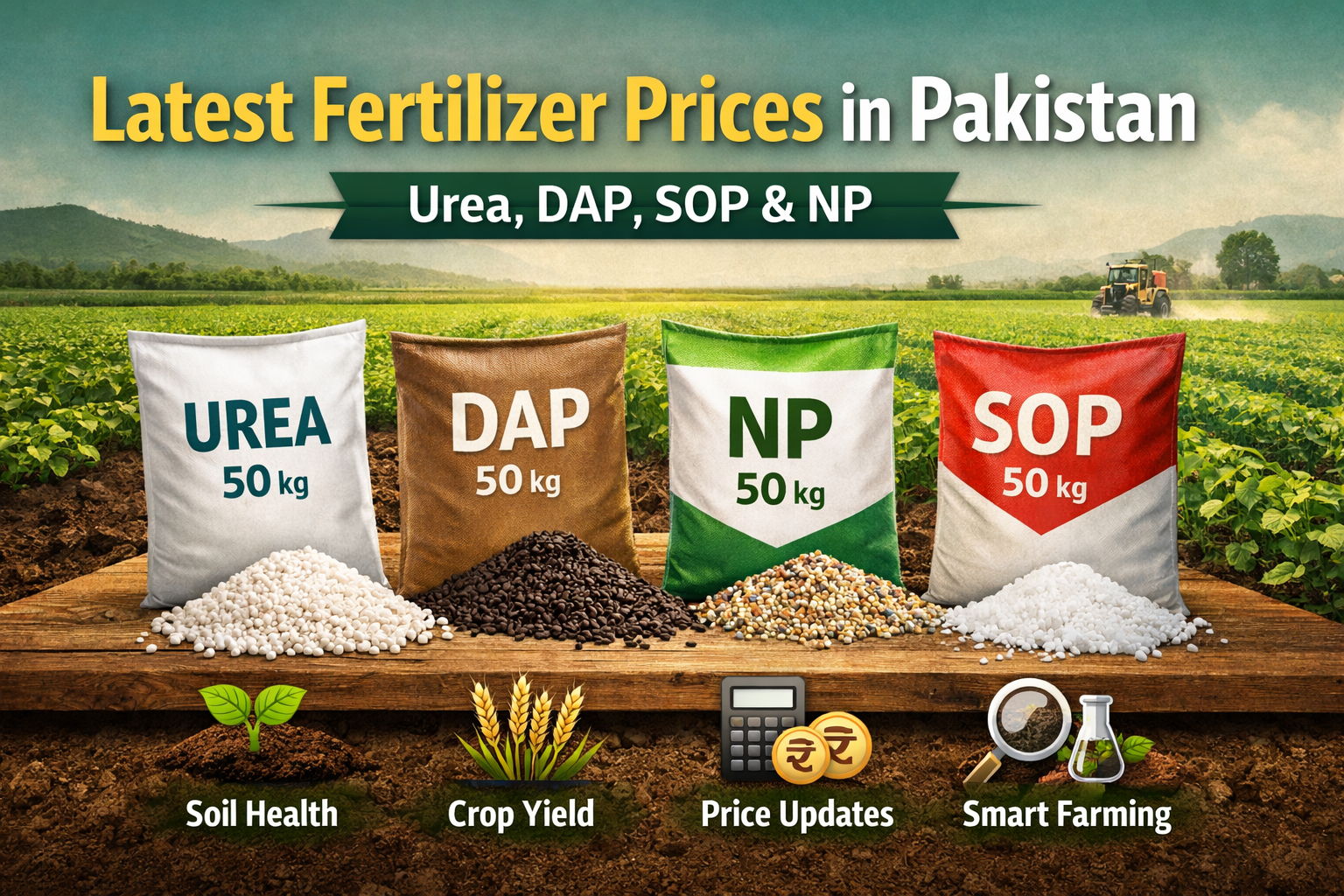
Farming in Pakistan is changing. Rising input costs, changing weather, and tired soils are pushing farmers to think beyond short-term yield. Today, farming is not just about growing crops — it’s about protecting soil health while managing fertilizer costs wisely.
In this guide, we’ll talk about:
- Soil health and sustainable farming
- The role of Urea, DAP, NP, and SOP
- Latest fertilizer prices in Pakistan (2025)
- How to use fertilizers without harming your land
This guide is written for real farmers who want long-term results, not shortcuts.
🌱 Understanding Soil Health in Simple Words
Healthy soil is alive. It holds water, supports roots, and contains helpful microorganisms. When soil becomes weak, crops suffer even if fertilizers are applied.
Many farmers unknowingly damage their soil by:
- Using too much urea
- Ignoring phosphorus and potassium
- Applying fertilizer without soil testing
Good soil means better crops today and secure farming for future generations.
🌾 Current Fertilizer Prices in Pakistan (2025)
Prices change by area and dealer, but the following are average market rates across Pakistan.
Urea Price in Pakistan (50 kg bag)
| Brand | Price Range (PKR) |
|---|---|
| Sona Urea | 4,300 – 4,700 |
| Engro Urea | 4,340 – 4,540 |
| Zabardast Urea | 5,200 – 5,510 |
| Other brands | 4,200 – 5,000 |
Urea is still the most used fertilizer in Pakistan because of its quick results and availability.
DAP Price in Pakistan (50 kg bag)
| Brand | Price Range (PKR) |
|---|---|
| Engro DAP | 12,500 – 15,600 |
| Sona DAP | 12,400 – 14,900 |
| FFC / FFBL | 12,400 – 15,000 |
| Sarsabz DAP | 11,700 – 12,500 |
DAP remains expensive, but it is essential for strong root growth and early plant health.
NP Fertilizer Price in Pakistan (50 kg bag)
| Brand | Price Range (PKR) |
|---|---|
| Engro NP Plus | 6,000 – 6,500 |
| Sarsabz NP | 7,300 – 7,500 |
| Other NP types | 8,000 – 9,000 |
NP is a good option when soil needs both nitrogen and phosphorus in balance.
SOP Price in Pakistan (50 kg bag)
| Brand | Price Range (PKR) |
|---|---|
| FFC / FMC SOP | 11,500 – 12,000 |
| SOP Powder | 10,100 – 11,050 |
| Zarkhez SOP | 10,500 – 11,200 |
| Imported SOP | 12,500 – 13,500 |
SOP is especially useful for vegetables, fruits, and sensitive crops.
🌿 Role of Each Fertilizer in Soil Health
Urea – For Growth and Green Color
Urea provides nitrogen, which helps plants grow faster and greener.
But overuse can damage soil and waste money.
Best practice:
- Apply in split doses
- Avoid overwatering after application
- Use according to crop stage
DAP – Strong Roots and Early Growth
DAP helps crops develop strong roots and improves early plant health.
Strong roots mean better water absorption and less stress during dry periods.
Because DAP is costly, using it wisely saves money and protects soil.
NP – Balanced Nutrition
NP gives both nitrogen and phosphorus together.
It helps when soil lacks multiple nutrients and avoids over-fertilization.
Many farmers now prefer NP because it reduces extra fertilizer costs.
SOP – Strength and Quality
SOP provides potassium, which:
- Improves crop quality
- Helps plants tolerate heat and drought
- Improves resistance to diseases
SOP is chloride-free, making it safe for fruits, vegetables, and sensitive crops.
🌾 Why Balanced Fertilization Matters
Using only one fertilizer again and again slowly damages soil. Balanced fertilization helps:
- Maintain soil structure
- Improve water retention
- Reduce fertilizer waste
- Increase long-term profit
Healthy soil always gives better returns than quick fixes.
🧪 Soil Testing – A Smart Farmer’s Tool
Soil testing helps you:
- Know exactly what your soil needs
- Avoid unnecessary fertilizer spending
- Improve yield without harming land
Even one soil test can save thousands of rupees per acre.
✅ Final Words
Sustainable farming starts with healthy soil and smart decisions.
Using Urea for nitrogen, DAP for phosphorus, NP for balance, and SOP for potassium — in the right amount and at the right time — helps farmers grow better crops while protecting their land.
Knowing today’s fertilizer prices in Pakistan also helps farmers plan better and avoid losses.
Healthy soil today means secure farming tomorrow.


