

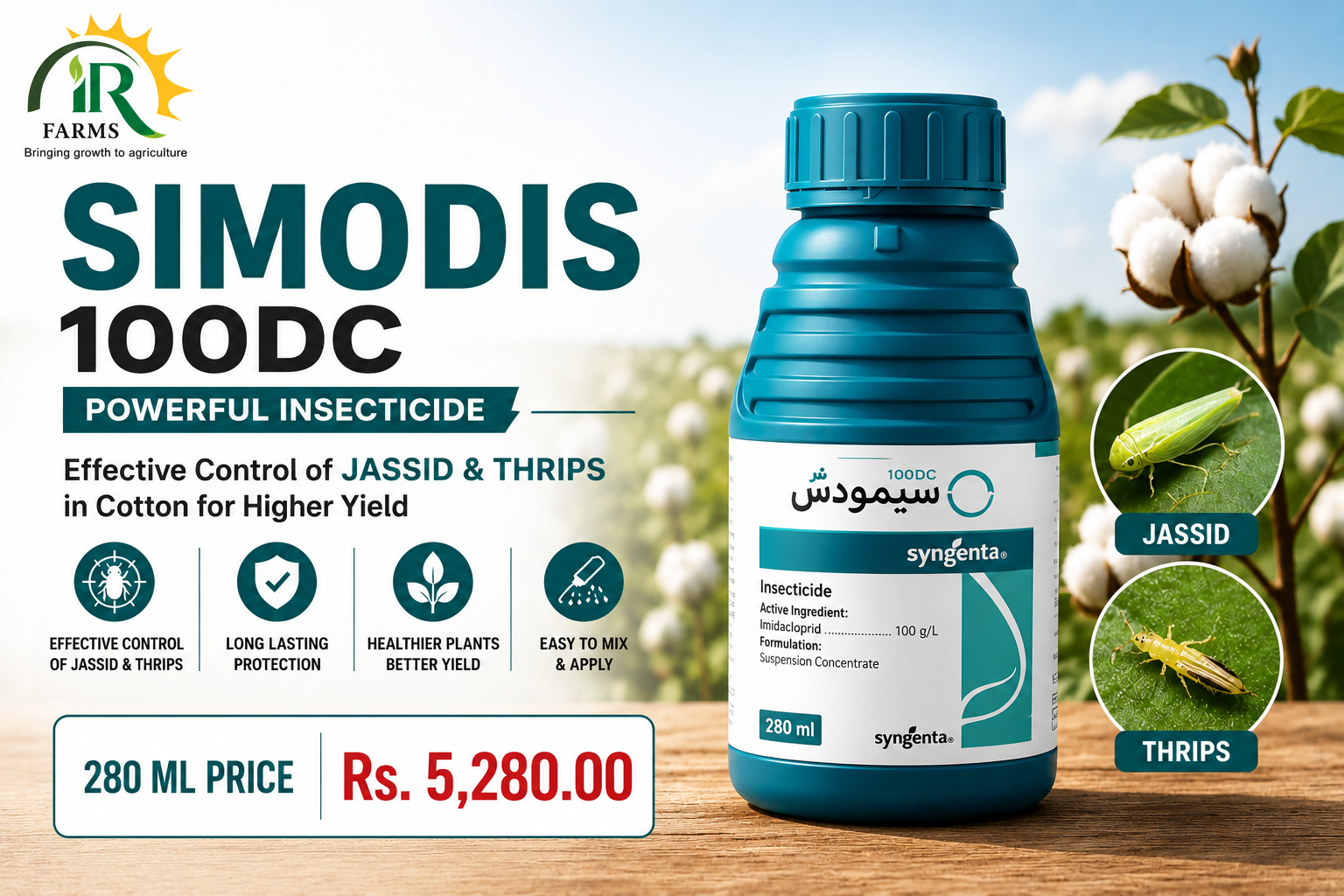
Simodis 100DC Price in Pakistan – Uses & Insecticide for Jassid & Thrips in Cotton
In the ever-evolving world of agriculture, ensuring the health of crops is paramount. One effective solution that has gained popularity in Pakistan is the insecticide Simodis 100DC. This product boasts impressive qualities, particularly in combatting pests like jassids and thrips in cotton. In this blog post, we will explore the imidacloprid price in Pakistan, the uses of Simodis 100DC, and why this insecticide has become a staple for many farmers.
Understanding Simodis 100DC
Simodis 100DC is an insecticide that contains imidacloprid, a member of the neonicotinoid family. This compound works by disrupting the nervous system of insects, providing a potent solution to pest infestations. Farmers tend to prefer this product for its effectiveness and relatively low toxicity to mammals, making it suitable for wide agricultural use.
Why Choose Simodis for Cotton?
Cotton is a vital crop in Pakistan, contributing significantly to the economy. However, jassids and thrips are notorious pests that can cause severe damage, reducing yields and affecting quality. Utilizing a reliable insecticide like Simodis 100DC offers farmers a way to effectively manage these pests.
Uses of Simodis 100DC
Simodis 100DC is typically employed to combat various pests, notably:
1. Jassids: These sap-sucking insects can cause significant damage to cotton plants by feeding on the plant’s sap. They can also transmit viruses.
2. Thrips: Thrips are also sap feeders and can lead to discoloration and deformation of the cotton plants, adversely affecting yield.
Using Simodis 100DC can help mitigate these threats, enhancing the overall health of the crop and the profitability of the harvest.
Imidacloprid Price in Pakistan
Understanding the pricing of essential agricultural products plays a pivotal role in planning for crop management. As of now, the imidacloprid price in Pakistan tends to vary based on market demand, packaging, and location. Farmers on a budget are encouraged to look into bulk purchasing options or explore seasonal discounts from local suppliers.
To get a clearer picture of current pricing, you can check [Simodis 100DC Price in Pakistan](https://irfarm.com/products/simodis-100dc-insecticide-280ml-by-syngenta?_pos=1&_psq=SIMODIS&_ss=e&_v=1.0) for up-to-date specifics.
Benefits of Using Simodis
There are several advantages to utilizing Simodis 100DC:
– Effective Pest Control: The primary benefit lies in its rapid action against pests that threaten cotton crops.
– Low Toxicity to Non-Target Organisms: Compared to other insecticides, imidacloprid presents a relatively low risk to beneficial insects when used correctly.
– Wide Application Range: Simodis can be applied in various agricultural settings, making it versatile for different farming needs.
– Long-Lasting Effects: The residual activity of imidacloprid ensures extended protection against recurring infestations.
Application Methods for Simodis
To reap the maximum benefits of Simodis 100DC, it is crucial to apply it correctly. Farmers should consider the following methods:
– Foliar Application: This involves spraying the insecticide directly onto the leaves of the plant, ensuring thorough coverage.
– Soil Drench: In some cases, applying the insecticide to the soil can help control pests that feed on plant roots.
Factors Affecting Efficacy
While Simodis is a powerful insecticide, its efficacy can be influenced by several factors:
– Environmental Conditions: Extreme weather may affect how the insecticide interacts with the pest and the plant.
– Timing of Application: Applying Simodis at the right stage of the crop can enhance its effectiveness against jassids and thrips.
– Application Technique: Proper spraying techniques ensure even coverage and reduce the chances of resistance development among pests.
Best Practices for Using Simodis
To maximize the benefits of Simodis 100DC, consider the following best practices:
– Read Labels Carefully: Always follow the manufacturer’s instructions for dosage and application timing to avoid damage to crops and the environment.
– Mixing with Other Chemicals: If combining Simodis with other pesticides, consult with an agronomist to avoid any negative interactions.
– Monitor Pest Populations: Regularly check for pest populations to determine if additional applications are necessary.
Comparing Simodis with Other Insecticides
When evaluating insecticides, it’s useful to compare features, effectiveness, and costs. Below is a comparison of Simodis 100DC with some other popular insecticides:
Comparison of Insecticides
| Feature | Simodis 100DC | Other Insecticide A | Other Insecticide B |
|---|---|---|---|
| Active Ingredient | Imidacloprid | Chlorpyrifos | Cypermethrin |
| Target Pests | Jassids, Thrips | Various Insects | Wide Range of Insects |
| Toxicity | Low | Moderate | High |
| Application Method | Foliar, Soil Drench | Foliar | Foliar |
| Residual Activity | Long-Lasting | Short | Medium |
This comparison illustrates the strengths of Simodis compared to other insecticides and serves as a guide for farmers in their selection process.
Tips for Effective Pest Management
To achieve optimal results in pest management, combine the use of Simodis with other strategies:
– Crop Rotation: Changing crops each season can break the pest cycle.
– Cultural Practices: Maintain healthy crops through proper watering, fertilization, and field sanitation.
– Biological Control: Introduce beneficial insects that prey on jassids and thrips, reducing the reliance on chemical solutions.
Potential Side Effects and Precautions
While Simodis is generally safe when used correctly, be aware of potential side effects:
– Plant Sensitivity: Conduct a small patch test to see how non-target plants react before widespread application.
– Health Precautions: Wear protective gear, such as gloves and masks, during application to avoid inhalation or skin contact.
FAQ Section
Q1: What is the active ingredient in Simodis 100DC?
A: The active ingredient in Simodis 100DC is imidacloprid, a neonicotinoid that targets pest nervous systems.
Q2: How effective is Simodis against jassids?
A: Simodis is very effective against jassids and thrips, providing rapid action and long-lasting residual effects.
Q3: Where can I find the best price for Simodis 100DC in Pakistan?
A: You can check the current pricing and availability of [Simodis 100DC Price in Pakistan](https://irfarm.com/products/simodis-100dc-insecticide-280ml-by-syngenta?_pos=1&_psq=SIMODIS&_ss=e&_v=1.0) on various agricultural supply platforms.
Q4: Can Simodis be mixed with other pesticides?
A: Yes, but it is crucial to consult with an agricultural expert to ensure compatibility and avoid negative chemical interactions.
Q5: What precautions should I take when using Simodis?
A: Always wear protective clothing, follow application guidelines, and conduct a patch test for sensitive plants.
Conclusion
In conclusion, Simodis 100DC is a highly effective solution for managing jassids and thrips in cotton crops. Its use of imidacloprid delivers swift and reliable results, ensuring healthier plants and higher yields for farmers across Pakistan. By understanding its applications, benefits, and pricing, you can make informed decisions about pest management in your farming practices. Investing in quality insecticides like Simodis can contribute significantly to the success of your agricultural endeavors.


