

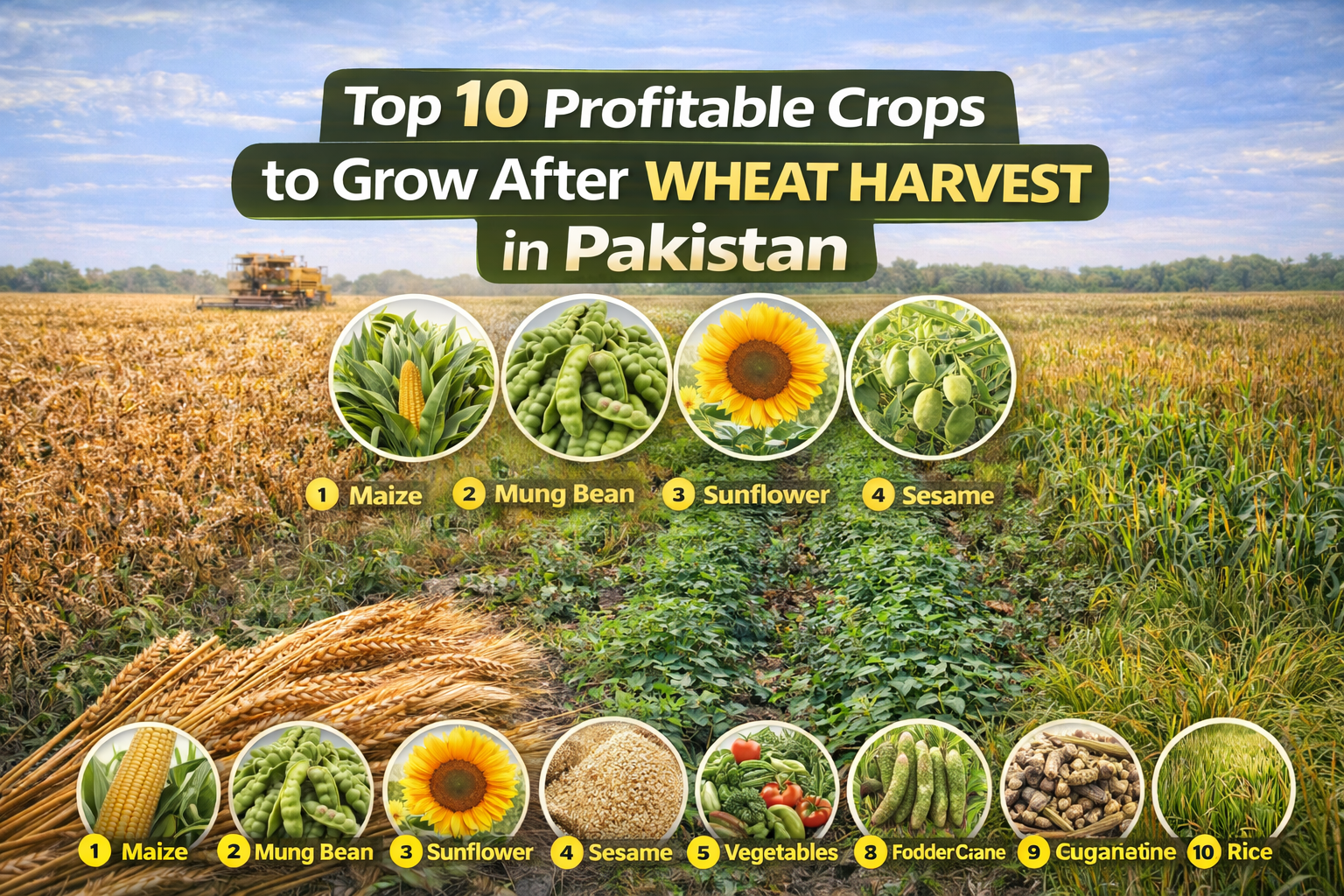
Top 10 Profitable Crops to Grow After Wheat Harvest in Pakistan
The wheat harvesting season in Pakistan typically occurs from April to June, with the 2026 wheat harvesting season expected to bring substantial yields across the country. After the wheat harvest, farmers face unique opportunities and challenges. It’s crucial to take advantage of the ample sunlight and residual soil fertility to boost their income with profitable crops to grow after wheat.
This blog will explore the top 10 profitable crops to cultivate after wheat harvest, detailing their potential benefits, growth duration, and their significance to the farming ecosystem. Whether you’re a seasoned farmer or a new entrant into agriculture, this guide aims to provide you with insightful options to maximize your revenue in the subsequent cropping season.
Understanding the Importance of Crop Rotation
Before diving into the specific crops, it’s essential to understand why crop rotation is vital. Crop rotation after wheat in Pakistan not only helps in maintaining soil fertility but also aids in reducing the incidence of pests and diseases. By alternating crops, farmers can ensure healthier soil and higher yields over time.
Top 10 Profitable Crops to Grow After Wheat Harvest
Let’s explore the best short duration crops after wheat that can be grown post-harvest, ensuring lucrative returns for farmers.
1. Maize (Corn)
Maize is one of the most widely grown crops in Pakistan, making it a popular choice after wheat. It’s a staple that commands high market prices. Maize can be planted soon after the wheat harvest, typically requiring 90-150 days to mature. As a short-duration crop, it fits perfectly into the agricultural calendar, allowing farmers to maximize their land.
2. Mung Bean
Mung beans are another excellent choice for farmers looking for profitable crops after wheat. They mature in just 60-90 days and are highly nutritious. The demand for mung beans continues to rise due to their health benefits. Additionally, they help in fixing nitrogen in the soil, thus enhancing soil fertility for the next crop.
3. Sunflower
Sunflower is increasingly becoming popular among Pakistani farmers due to its oil content. It can be sown within a month after harvesting wheat and generally takes about 90-100 days to mature. With a growing market for sunflower oil, this crop holds lucrative potential.
4. Sesame
Another oilseed that can be grown after wheat is sesame. Its growth cycle ranges from 90 to 120 days. Cultivating sesame not only provides an avenue for profit but also aids in improving soil health through deep-root penetration.
5. Vegetables
Growing vegetables after wheat harvest is a profitable venture. Vegetables like okra, tomatoes, and cucumbers can be planted right after the wheat is harvested. These crops generally have a short turnaround time and high market demand which makes them incredibly profitable.
6. Fodder Crops
For farmers engaged in livestock farming, planting fodder crops after wheat can turn out to be incredibly beneficial. Fodder crops such as sorghum or millet can be ready for grazing in about 60-90 days. This ensures a continuous feed supply, yielding high profits from meat or dairy production.
7. Intercropping with Pulses and Legumes
Intercropping after wheat presents another profitable avenue. Cultivating legumes such as chickpeas or lentils alongside other crops can enhance soil fertility and increase overall yield. This method is especially beneficial for resource-limited farmers.
8. Sugarcane
Although sugarcane has a longer growth cycle, it can be intercropped after wheat in regions with suitable climates. Harvesting takes nearly 12-18 months, but given the high market price for sugar and related products, the investment can be worthwhile.
9. Chickpea (Gram)
Chickpeas can be planted after wheat harvesting and are typically ready in approximately 100-150 days. As a staple in households, the demand for chickpeas remains robust, making them a worthwhile addition to the farming roster.
10. Rice (Short Duration Varieties)
Short-duration rice varieties can be grown after the wheat harvest. These varieties usually mature in about 120-130 days, allowing farmers to utilize the ample water available during the summer.
The Advantages of Gap Filling Crops
Farmers often face unutilized land between the wheat harvest and the sowing of the next major crop. Gap filling crops after wheat include quick-growing varieties of vegetables or legumes, offering an additional income stream. These crops can be harvested before the next planting season, ensuring that no land sits idle.
Factors to Consider When Choosing Crops
When selecting which best crops after wheat harvest to plant, several factors come into play:
– Market Demand: Understanding local market needs is crucial for profitability.
– Soil Fertility: Different crops have varying nutrient requirements, and rotating them can help in sustaining soil vitality.
– Water Availability: Some crops may require more water than others, especially during the hot summer months following wheat harvest.
– Labor Requirement: Assess the labor needs of the crops, ensuring you have sufficient manpower to manage them effectively.
2026 Wheat Harvesting Season: Anticipated Trends
As we approach the wheat harvesting season in Pakistan 2026, farmers are encouraged to plan ahead. The increasing climatic variations require adaptability in farming strategies. Focusing on profitable crops to grow after wheat will not only secure economic stability but also enhance food security within the community.
Exploring Intercropping Techniques
Intercropping after wheat can help maximize land use and crop yield. For instance, planting legumes alongside cereal crops can reduce pest incidence, suppress weeds, and increase overall biomass yield. This technique not only supports better agricultural practices through biodiversity but also improves household nutrition by providing varied food sources.
The Role of Technology in Crop Management
Modern technology, including satellite imagery and farming apps, plays a crucial role in determining the best crops to plant post-harvest. These tools help farmers make informed decisions about crop rotation and management practices tailored to specific climatic conditions.
Frequently Asked Questions (FAQ)
What are the best crops to grow after wheat in Pakistan?
The best crops include maize, mung beans, sunflower, sesame, vegetables, fodder, chickpea, and short-duration rice varieties.
What is the significance of crop rotation after wheat?
Crop rotation helps maintain soil fertility, reduces pest and disease cycles, and ultimately increases yields over time.
How long does it take for maize to mature after wheat?
Maize typically requires about 90-150 days to mature after being planted.
What are gap filling crops after wheat?
Gap filling crops are quick-growing varieties that can be planted in the interval between wheat harvest and the next major crop, providing an additional income source.
What should farmers consider before choosing post-wheat crops?
Farmers should consider market demand, soil quality, water availability, and labor requirements when selecting crops to grow after wheat.
Conclusion
In conclusion, transitioning from wheat to other profitable crops after wheat harvest is an excellent way for farmers in Pakistan to maximize their productivity and income. By embracing sustainable agricultural practices, including crop rotation and intercropping, they can ensure a thriving farming business. The wheat harvesting season in Pakistan 2026 offers an opportunity to make informed decisions about which crops to plant, laying the foundation for resilience and profitability in an increasingly competitive agricultural landscape.


