

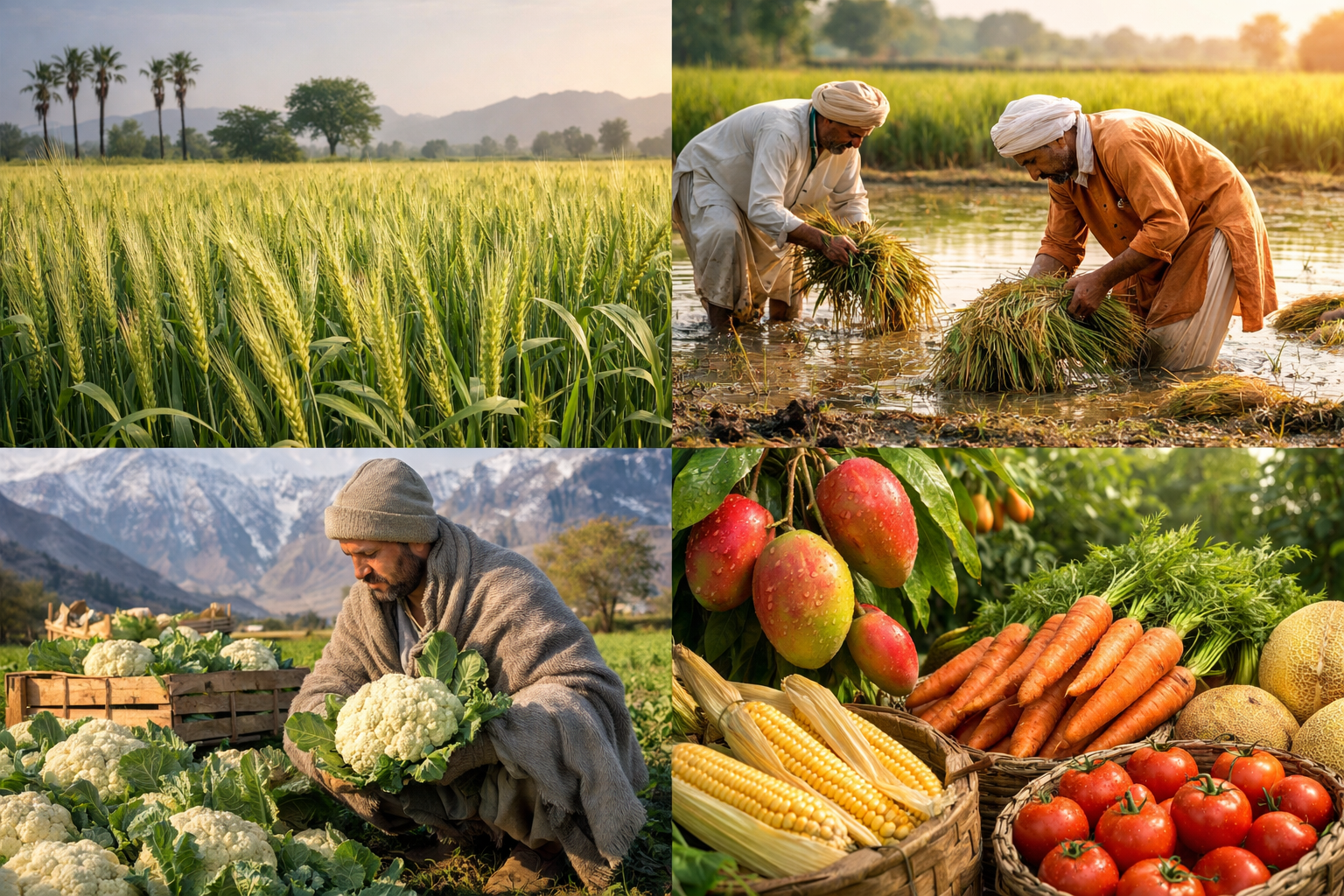
Seasonal Crop Calendar Pakistan — What to Grow Month by Month
Efficient farming requires precise planning, especially when it comes to understanding the agricultural cycles. Pakistan, with its diverse climate zones and rich farmland, follows a unique seasonal crop calendar that guides farmers to optimize their crop yields. Whether you are a smallholder farmer or an agribusiness enthusiast, knowing the crop calendar Pakistan is essential to maximize productivity and profitability.
This comprehensive guide will walk you through the season wise farming structure in Pakistan and the ideal sowing time for crops, ensuring you plant the right crop at the right time every month. By the end, you will have a month-by-month breakdown of the most suitable crops to grow, helping you strategize your farming for the year.
Understanding Seasonal Farming in Pakistan
Pakistan’s agriculture is primarily divided into two major cropping seasons: Kharif and Rabi, along with a short summer crop cycle in some regions.
– Kharif Season (Monsoon Crops): Starts from late May to October, influenced by monsoon rains. Major crops: rice, cotton, maize, sugarcane.
– Rabi Season (Winter Crops): Starts from October and goes on till March, relying on irrigation since rainfall is minimal. Major crops: wheat, barley, mustard, peas.
– Summer Crops: These are grown during summer months, mostly horticultural or short-term crops like vegetables, watermelons, and melons.
Each season has distinct temperature, rainfall, and soil moisture conditions, which influence the sowing time for crops and their growth cycle.
Month-by-Month Seasonal Crop Calendar Pakistan
Here is the precise seasonal crop calendar Pakistan outlining what to plant and harvest in each month. This will help farmers plan their irrigation, pest management, and harvesting operations more effectively.
January
– Main Crops to Grow: Wheat (late sown), Barley, Mustard, Onions, Peas, Citrus (harvesting continuing)
– Sowing Time: Continue with late planting of Wheat and Barley in some regions. Mustard and peas can be sown early in the month.
– Season: Rabi, mild winter conditions support growth.
February
– Main Crops to Grow: Wheat, Barley, Mustard, Cotton (early sowing in lower Punjab)
– Sowing Time: Essential month for sowing Mustard and Rabi vegetables. Cotton sowing begins toward the end of February in southern Punjab and Sindh.
– Season: Transition from cool winter to warmer early spring.
March
– Main Crops to Grow: Wheat (maturing stage), Barley (maturing), Cotton (early vegetative), Sugarcane (planting begins)
– Sowing Time: Optimum time for Cotton and Sugarcane planting. Wheat harvest starts late March in some regions.
– Season: Early summer conditions commence, requiring irrigation management.
April
– Main Crops to Grow: Cotton, Sugarcane, Maize (spring varieties), Vegetables (onion, tomato)
– Sowing Time: Ideal for maize and spring vegetables. First planting of summer crops occurs.
– Season: Hot spring season; irrigation critical for emerging plants.
May
– Main Crops to Grow: Rice (nursery raising), Cotton, Sugarcane, Watermelon, Melon
– Sowing Time: Start nursery for rice; transplanting begins at month-end in many areas. Sowing of watermelon and melon encourages early summer harvest.
– Season: Kharif season starts, peak heat and monsoon delays possible.
June
– Main Crops to Grow: Rice (transplanting), Cotton, Sugarcane, Maize (Kharif varieties)
– Sowing Time: Transplant rice within the first two weeks. Continue sowing Kharif maize where rainfall allows.
– Season: Monsoon onset in some regions; humidity rises.
July
– Main Crops to Grow: Rice, Cotton, Sugarcane, Maize, Vegetables (Okra, Ladyfinger)
– Sowing Time: Late rice transplanting in northern zones; keep up with mid-season irrigation.
– Season: Peak monsoon; waterlogging risk management necessary.
August
– Main Crops to Grow: Rice (maturing), Cotton (peak growth), Sugarcane, Vegetables (Pumpkin, cucumber)
– Sowing Time: Last chance for some late rice transplants; maintain pest controls on cotton and maize.
– Season: Monsoon wanes; humidity remains high.
September
– Main Crops to Grow: Cotton (harvesting begins late September), Maize (early sowing), Vegetable crops for Rabi season
– Sowing Time: Prepare land for Rabi crops. Use this month to sow peas and mustard as temps decrease.
– Season: Transition from monsoon to mild autumn.
October
– Main Crops to Grow: Wheat (sowing begins), Barley, Mustard, Peas
– Sowing Time: Critical month for the start of Wheat sowing; Mustard and peas planting continues into late October.
– Season: Ideal for Rabi crop plantation due to cool weather.
November
– Main Crops to Grow: Wheat, Barley, Mustard, Peas, Garlic
– Sowing Time: Continue sowing Wheat and Barley in all suitable regions. Garlic planting is optimum now.
– Season: Cool and dry, suitable for Rabi crop growth.
December
– Main Crops to Grow: Wheat (early growth stage), Barley, Mustard, Onions
– Sowing Time: Final phase for some late Rabi crop sowing like onions and mustard.
– Season: Deep winter, frost protection measures may be necessary in north.
Key Factors Affecting Seasonal Crop Calendar Pakistan
Knowing the sowing time for crops alone isn’t enough. Several factors influence the success of your crops every season:
Comparison of Key Agricultural Factors Affecting Crop Calendar in Pakistan
| Comparison Factor | Kharif Season | Rabi Season |
|---|---|---|
| Major Crops | Rice, Cotton, Maize, Sugarcane | Wheat, Barley, Mustard, Peas |
| Sowing Time | May-July (depends on monsoon) | October-December |
| Water Requirements | High (monsoon rains + irrigation) | Moderate (irrigation essential) |
| Temperature Range | Warm to hot (25-35°C) | Cool to mild (10-25°C) |
| Harvest Time | Sept-November | March-April |
Seasons influence the choice of crops to grow and their management needs. This cycle also guides pest and disease control—as timing impacts vulnerability.
Tips for Successful Season Wise Farming in Pakistan
– Adhere to Local Recommendations: Crop calendars can vary slightly depending on region — Sindh, Punjab, Khyber Pakhtunkhwa, and Balochistan have microclimate differences.
– Soil Testing and Preparation: Always perform soil testing before sowing and amend soils accordingly to optimize yield.
– Use Certified Seeds: Trusted seed varieties suited to the season deliver better germination and disease resistance.
– Proper Irrigation Scheduling: Use water judiciously according to seasonal requirements—too little or too much can harm crops.
– Integrated Pest Management: Timely monitoring and control measures safeguard crops against pests that rise in specific seasons.
Frequently Asked Questions (FAQs)
Q1: What is the best month to sow wheat in Pakistan?
The best sowing time for wheat in Pakistan is generally from October to early November, which aligns with the start of the Rabi cropping season.
Q2: When does Kharif season start in Pakistan?
Kharif season in Pakistan begins around late May to early June and is synchronized with the monsoon rains.
Q3: Can rice be grown in all parts of Pakistan?
Rice cultivation is mainly limited to Punjab and Sindh provinces due to the need for abundant water during the monsoon period.
Q4: What crops can be grown in winter aside from wheat?
Barley, mustard, peas, garlic, and some vegetables like onions are popular winter crops in Pakistan.
Q5: How can farmers manage water efficiently during the Rabi season?
Efficient irrigation scheduling, use of drip irrigation, and mulching to reduce evaporation are some effective water management techniques during the Rabi season.
Conclusion
A well-planned Seasonal Crop Calendar Pakistan is vital to ensure optimal crop yield, improve farm profitability, and sustain agricultural productivity throughout the year. By understanding the month-by-month sowing time for crops and practicing season wise farming, farmers can better adapt to climatic conditions and market demands.
Stay aligned with local agronomy advice, monitor soil and weather patterns carefully, and select the right crops as per the calendar to experience successful harvests season after season. Whether you are planting wheat in winter or rice in the monsoon, this guide serves as a comprehensive roadmap to Pakistan’s agricultural rhythms.


