

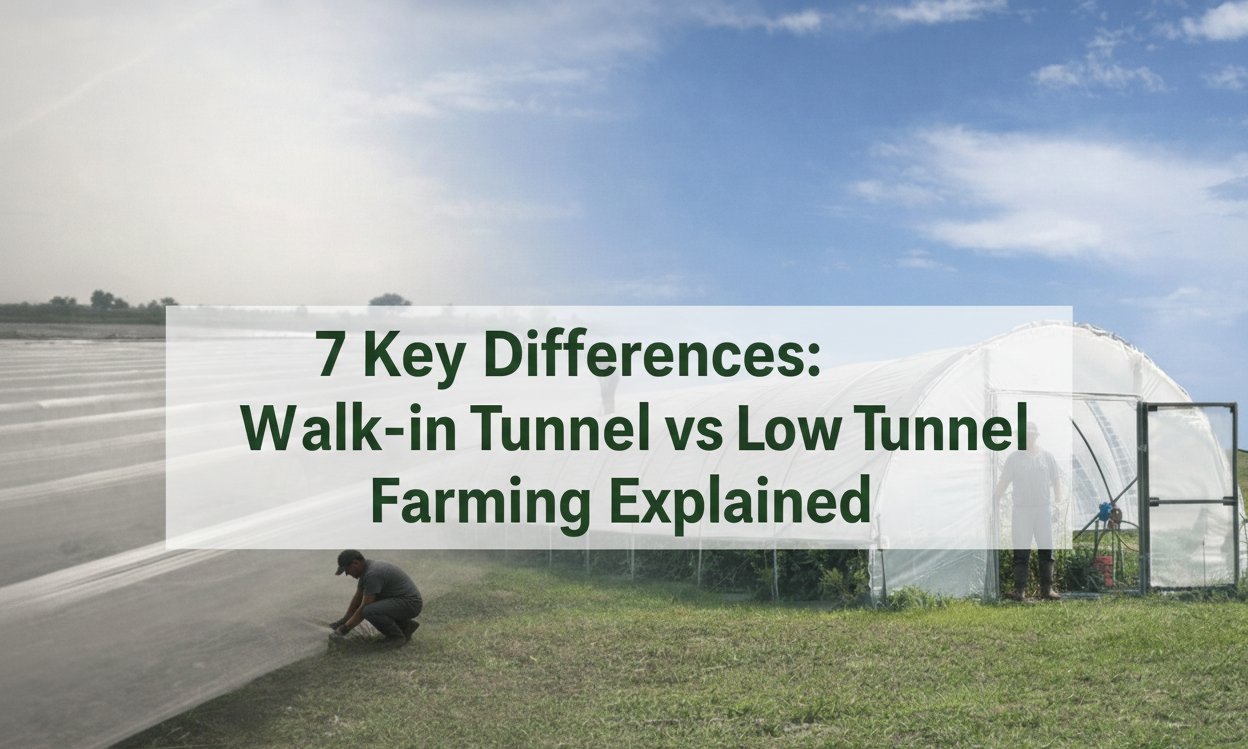
As a farmer, your land is your life. Every season, you face the same gamble: will the weather play nice, or will a sudden frost wipe out months of hard work? This is why tunnel farming has become a game-changer in Pakistan and across the globe. It takes the "luck" out of the equation. But when you sit down to plan, the biggest question is always: walk-in tunnel vs low tunnel farming—which one is actually worth your hard-earned money?
If you are tired of losing crops to unpredictable weather and want to start earning "off-season" profits, you are in the right place. In this guide, we’ll talk heart-to-heart about the differences, the costs, and why one of these methods might just be the best decision you ever make for your farm.
What Exactly is Tunnel Farming?
Before we get into the nitty-gritty, let’s keep it simple. Tunnel farming is like building a temporary "plastic house" for your plants. By using bamboo or iron pipes covered with specialized plastic, you create a warm environment where crops like tomatoes, cucumbers, and peppers can grow even in the dead of winter.
It’s all about control. You control the heat, the water, and the pests. But to do it right, you need the right tunnel farming equipments and high-quality seeds from trusted sources like Pioneer or Haji Sons.
The Comparison: Walk-in Tunnel vs Low Tunnel Farming
When we compare these two, think of it like comparing a small car to a big tractor. Both get the job done, but one handles a lot more work.
1. Height: The "Back-Breaking" Factor
The most immediate difference is the height.
- Low Tunnels: These are usually only 2 to 3 feet high. They sit low to the ground.
- Walk-in Tunnels: These stand 6 to 10 feet tall.
The Farmer’s Perspective: In a low tunnel, every time you want to check your plants or pull a weed, you have to bend over or crawl. Over 5 acres, that is a lot of back pain. In a walk-in tunnel, you walk in like a boss. You can stand tall, breathe easily, and manage your crops without physical exhaustion.
2. Crop Variety and Vertical Growth
In a low tunnel, you are limited to "creepers"—plants that spread on the ground. Think of watermelons or muskmelons.
In a walk-in tunnel, the sky is the limit (literally). You can use trellis wires to grow crops vertically. This means you can grow three times more food on the same square foot of land because your plants are growing up, not just out. This is perfect for high-value crops from Seminis or Bayer.
3. Airflow and Temperature (The "Breathability" Gap)
Plants are like us; they need to breathe.
- Low Tunnels: Because the space is so small, it heats up very fast. If you don't open the plastic by 10:00 AM on a sunny day, your plants might literally "cook" inside.
-
Walk-in Tunnels: Because there is a large volume of air inside, the temperature stays more stable. It takes longer to heat up and longer to cool down, which keeps your plants stress-free.

4. Spraying and Maintenance
This is where the walk-in tunnel really wins. When you need to apply insecticides or fungicides, you can walk through the rows with your spraying machines and hit every leaf perfectly.
In a low tunnel, the plastic is often in the way. You end up missing spots, and that’s where pests like whiteflies or aphids hide and multiply. To protect your investment in products from the Evyol Group or Syngenta, a walk-in tunnel gives you the best "coverage."
5. Durability and Wind Resistance
Farming in Pakistan means facing heavy winds and monsoon rains
- Low Tunnels: These usually use thin bamboo sticks or light plastic. A strong wind can easily rip the plastic off or collapse the structure, leaving your crops exposed to the cold in the middle of the night.
- Walk-in Tunnels: These are built with heavy-duty galvanized iron (GI) pipes anchored deep into the ground. They act like a permanent room. When you invest in high-quality tunnel farming equipments, you are buying peace of mind
 6. Harvesting Speed and Quality
When it’s time to go to the market, every hour counts.
- Low Tunnels: You have to lift the plastic, harvest while squatting, and then carefully put the plastic back. It is slow, tedious work.
-
Walk-in Tunnels: You can use a trolley or crates inside the tunnel. You can harvest much faster, and because the plants are held up by wires (vertical growth), the fruit is clean, straight, and free from soil rot. Clean fruit from Millan Agro Seed always gets a premium price at the Mandi.

7. Long-term Soil Health and Management
Managing the ground inside your tunnel is easier when you have space.
- Low Tunnels: It is very difficult to add fertilizers or organic matter once the plants start spreading.
-
Walk-in Tunnels: You can easily move between the rows to apply micro-nutrients or fix any irrigation leaks. This keeps your soil productive for multiple years rather than just one season.

Why Walk-in Tunnel is Best for Your Pocket
I know what you are thinking: "But the walk-in tunnel is more expensive!" You are right. The initial cost for iron pipes and heavy-duty plastic is higher. However, let’s look at the "Zameendaar" logic:
- Longer Season: You can start earlier and end later, catching the highest market prices.
- Higher Yield: Vertical farming means more fruit per plant.
- Durability: While low tunnels often get ripped by heavy winds, a well-built walk-in tunnel can stand for years.
If you are serious about shifting from "subsistence farming" to "business farming," the walk-in tunnel is the way to go. It allows you to use advanced fertilizers and micro-nutrients more effectively, ensuring every drop of money you spend translates into weight at the market.
Tips for Success in Tunnel Farming
Whether you choose a walk-in or a low tunnel, your success depends on the quality of your inputs. You wouldn't put cheap oil in a new tractor, so don't put cheap chemicals on your crops.
Soil Preparation
Before you even think about plastic, fix your soil. Use quality products from Jaffer Brothers or Tara Group to ensure your soil is rich in nutrients. A healthy plant in a tunnel is much more resistant to disease.
Weed Control
Inside a tunnel, weeds love the warmth just as much as your crops do. Don't let them steal your plant's food. Use reliable herbicides-weedicides from trusted names like FMC or Swat Agro Chemicals.
Choosing the Right Seed
This is the most important step. For tunnel farming, you need "Hybrid" seeds that are bred for high humidity and heat. Check out our Milan Agro Seed collection for varieties that are proven to perform in our local climate.
Getting Started with IR Farm
We know that farming is hard work, and finding the right advice can be even harder. At IR Farm, we aren't just selling products; we are your partners in the field.
- Need a full setup? Explore all our collections.
- Need specific advice? Read our latest blogs or learn more about us.
- Ready to buy? Check our latest stock of insecticides and fertilizers.
Join Our Community
We love hearing from you! If you want to see how other farmers are using walk-in tunnels to double their profits, follow us on our social platforms:
- Watch our field tours on YouTube.
- Join the conversation on Facebook.
- See quick farming hacks on TikTok.
Conclusion
In the battle of walk-in tunnel vs low tunnel farming, there is no "wrong" answer, only a "better" one for your goals. If you have a small budget and want to grow melons, start with a low tunnel. But if you want to build a sustainable, high-profit business where you can grow anything from cucumbers to tomatoes comfortably, invest in a walk-in tunnel.
The weather is changing, and traditional farming is getting riskier. It’s time to move under the cover.
Have a specific question about your land? Contact us today. Let’s grow something great together!


