

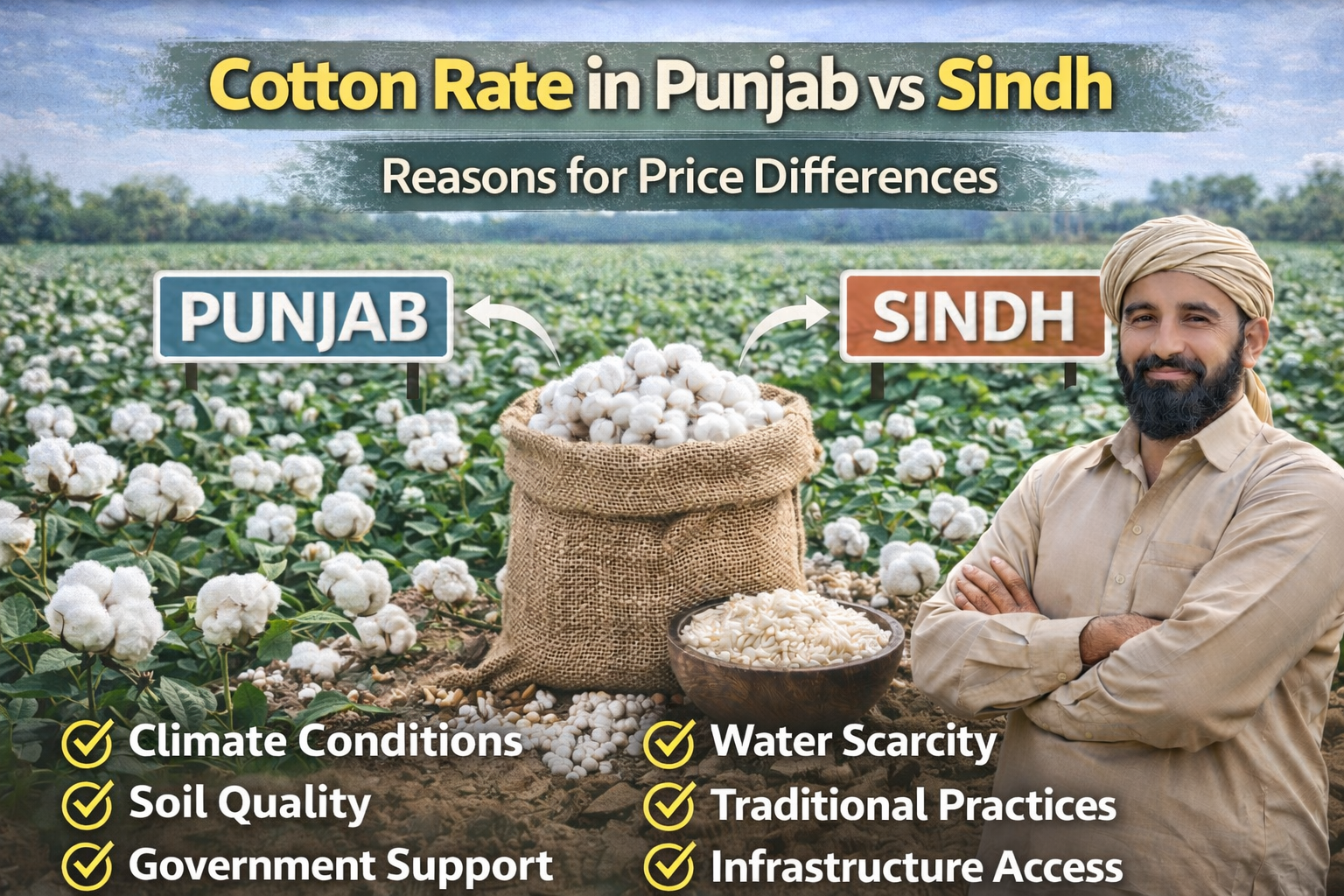
Cotton is one of the primary cash crops in Pakistan, playing a crucial role in the country’s economy. It serves as a raw material for the textile industry, which is one of the largest contributors to Pakistan’s exports. However, have you ever wondered why the cotton rate in Punjab Pakistan today often differs from the cotton rate in Sindh today? In this article, we will delve into the factors that contribute to these price variations, exploring the cotton market in Pakistan, and answering some common queries related to it.
Overview of the Cotton Market in Pakistan
Pakistan is known for its diverse agricultural landscape, with cotton being predominantly grown in two provinces: Punjab and Sindh. These provinces have unique climatic conditions, soil types, and agricultural practices, all of which contribute to the differences in cotton prices. Understanding these factors is pivotal for farmers, investors, and those involved in the cotton industry.
Key Factors Influencing Cotton Prices
1. Climate and Weather Conditions
The climate of Punjab and Sindh varies significantly. Punjab, which has a more moderate climate, usually experiences favorable conditions for cotton growth. In contrast, Sindh faces higher temperatures and less rainfall, affecting crop yields and ultimately cotton prices.
2. Soil Fertility
Punjab boasts fertile alluvial soil that is conducive to cotton farming. In contrast, parts of Sindh may have saline soils that can hinder crop production. The differences in soil quality can lead to variations in yield and, consequently, price.
3. Supply Chain Dynamics
The supply chain for cotton differs between Punjab and Sindh. Local infrastructure, market access, and transportation can impact prices. Punjab often has better-developed infrastructure, allowing for smoother procurement and distribution processes.
4. Government Policies and Support
Government policies, subsidies, and interventions can significantly affect cotton prices. For instance, if Punjab has more favorable government support for cotton farmers than Sindh, this can lead to lower prices in Punjab due to increased supply.
5. Demand Fluctuations
Seasonal demand fluctuations and market demand for cotton products can also cause price disparities. The textile industry’s demand in urban centers may influence cotton prices in regions closer to major manufacturing hubs.
Comparison of Cotton Prices in Punjab and Sindh Today
To provide a clearer picture, let’s examine the cotton rate in Punjab Pakistan today versus the cotton rate in Sindh today. The following table summarizes current prices, as well as various factors affecting them.
Current Cotton Prices in Punjab and Sindh
| Comparison Factor | Cotton Rate in Punjab (PKR) | Cotton Rate in Sindh (PKR) |
|---|---|---|
| Average Cotton Price | PKR 7,300 and PKR 9,150 per maund | PKR 7,300 and 9,500 per maund |
| Soil Type | Alluvial | Saline |
| Average Yield (kg/hectare) | 700–702 kg/hectare | 1,013 kg/hectare. |
| Farming Practices | Modern | Traditional |
As seen in the table, there is a noticeable difference in cotton prices between Punjab and Sindh. The average cotton price stands at PKR 8,500 in Punjab, while in Sindh, it is at PKR 8,000. This difference can be attributed to several aforementioned factors.
Insights into the Cotton Rates Provisioning
Kapas Rate Province Wise
Understanding kapas rates province-wise is essential for farmers and stakeholders in the cotton industry. The price of kapas (raw cotton) fluctuates based on various market dynamics, including local and international demand, crop health, and more.
While the rates can vary from season to season, they are fundamentally linked to the quality of the cotton produced in different provinces. For instance, desi cotton, known for its superior quality in certain regions, may fetch a higher price compared to other varieties.
The Role of Local Markets
Local markets play a significant role in determining cotton prices. Traders, farmers, and processors interact within these markets, impacting how prices are set. In Punjab, markets may feature a more competitive environment, leading to slight decreases in rates due to increased supply. Conversely, Sindh might witness price hikes where competition is less intense.
Factors Contributing to Desi Cotton Prices
Desi cotton is highly valued in Pakistan, especially for its quality. Its prices can differ vastly across provinces for several reasons:
– Quality Assessment:
Quality impact on pricing is critical. Higher quality desi cotton will inherently command a better price in markets.
– Market Demand:
Fluctuating industrial demand for desi cotton versus other varieties can influence pricing.
Challenges Facing Cotton Farmers
While cotton remains a lucrative crop, farmers in both Punjab and Sindh face several challenges that can influence cotton rates:
1. Pest Infestation:
Cotton crops are susceptible to various pests, which can destroy yields and lower prices.
2. Water Scarcity:
Sustainable water usage has become a pressing issue, particularly in Sindh, where irrigation resources can be limited. This scarcity can lead to reduced production and increased prices.
3. Economic Uncertainties:
Global market fluctuations and local economic instability can further impact farmers’ profitability and price setting.
Market Trends and Future Projections
The trends affecting the cotton market provide insights into what stakeholders can expect moving forward:
1. Climate Change:
Altered weather patterns can impact yield forecasts and prices. Continuous monitoring and adaptation are necessary.
2. Technological Advancements:
Improved agricultural technologies and seed varieties in Punjab are enhancing cotton production, leading to more stable pricing structures.
3. Policy Changes:
Changes in agricultural subsidies and governmental support can also influence future cotton rates significantly.
FAQ Section
What is the current cotton rate in Punjab, Pakistan?
The current cotton rate in Punjab is approximately PKR 8,500 per maund.
How does the cotton rate in Sindh compare with Punjab?
Currently, the cotton rate in Sindh is about PKR 8,000 per maund, which is lower than in Punjab.
What factors affect cotton prices in Pakistan?
Several factors affect cotton prices, including climate conditions, soil fertility, government policies, and market demand.
Why is desi cotton priced higher than other varieties?
Desi cotton is often of superior quality and is in high demand in the textile industry, leading to better pricing.
How can farmers increase their cotton yield?
Farmers can employ modern farming techniques, better irrigation practices, and pest management strategies to increase yield.
Conclusion
In summary, the disparity in cotton prices between Punjab and Sindh today can be attributed to a multitude of factors, including agricultural practices, climate, soil quality, and market dynamics. Understanding these factors is not only essential for farmers but also for investors, traders, and anyone involved in the cotton industry. By keeping an eye on local market trends and changes, stakeholders can make informed decisions that benefit their operations. The cotton market in Pakistan is continuously evolving, and staying informed is critical to seizing opportunities and addressing challenges.
By comprehensively understanding the dynamics at play, it becomes apparent that regional differences hold significant importance in the pricing of agricultural products like cotton.


