

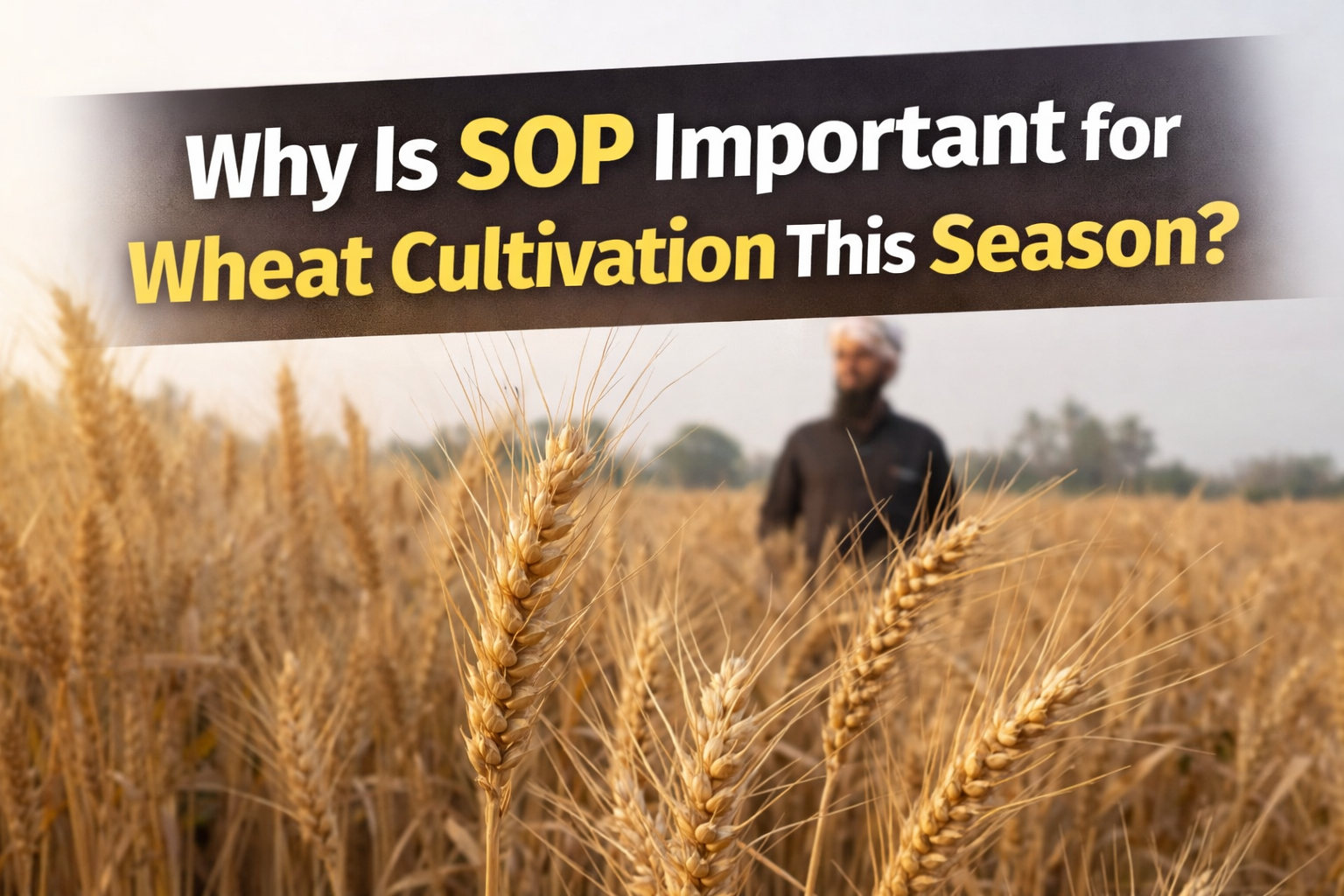
Why Is SOP Important for Wheat Cultivation This Season? Avoid Mistakes and Achieve Better Yields
Wheat farming is a pivotal agricultural practice in Pakistan, providing a staple food source and contributing significantly to the economy. As the wheat planting season approaches, understanding the *gandum SOP this season* becomes crucial. Implementing a Standard Operating Procedure (SOP) can streamline your efforts, helping you to avoid common pitfalls while maximizing yield. In this article, we will explore how to ensure successful *gandum ki kasht* through well-defined SOPs, discuss the necessary inputs for wheat cultivation, and highlight ways to enhance productivity.
The Importance of SOP in Wheat Crop Management
Standard Operating Procedures in agriculture form a crucial backbone for successful wheat farming. SOPs are step-by-step guidelines that streamline each process involved in wheat cultivation, from pre-planting to post-harvest practices. Not only do they help in avoiding mistakes, but they also ensure the optimal use of resources such as water, fertilizers, and other agricultural inputs.
1. Consistent Quality: SOPs help maintain a level of consistency in farming practices, leading to uniform quality in wheat production.
2. Risk Management: Various threats such as pests, diseases, and weather extremes can undermine wheat yields. Proper SOPs can mitigate these risks through timely interventions.
3. Efficient Resource Utilization: Resources like labor and fertilizers can be utilized more effectively through structured guidelines, ultimately saving costs and increasing productivity.
Common Mistakes in Wheat Farming in Pakistan
Even with an excellent *gandum SOP this season*, farmers can still fall prey to various mistakes that negatively impact yield. Here are some common pitfalls in wheat farming in Pakistan:
1. Poor Seed Selection
Choosing the right variety of wheat is essential for optimal yield. Farmers often make the mistake of using old or non-certified seeds, which can lead to poor germination rates and lower yields.
2. Improper Land Preparation
Land that is not adequately prepared can significantly impact the quality of the wheat crop. Farmers might neglect necessary steps like plowing, leveling, and soil aeration, which can affect root development and water retention.
3. Inadequate Water Supply
Water stress during critical growth phases can lead to stunted growth. Farmers may overlook irrigation schedules, jeopardizing the crop’s health.
4. Insufficient Nutrient Management
Using the wrong type or insufficient amount of fertilizers can stunt growth and reduce yield. Proper application of *gandum fertilizer aur dawa* is critical for nutrient supply.
Essential Inputs for Wheat Cultivation (Gandum ke Liye Zaroori Inputs)
To achieve better yields, understanding the essential inputs for wheat farming is fundamental. Here are some of the key inputs:
1. Quality Seeds: Always choose certified seeds that are known for their high yield potential.
2. Soil Fertility Enhancers: Apply compost and organic matter to improve soil fertility and structure.
3. Fertilizers: Use a balanced fertilizer regimen, including nitrogen, phosphorus, and potassium.
4. Pesticides and Herbicides: Control pest populations and weeds to minimize competition for nutrients and space.
Implementing SOP for Wheat Crop in Pakistan
Planning and Preparation Stage
1. Soil Testing: Conduct soil tests to understand the nutrient requirements.
2. Select Varieties: Choose high-yield, disease-resistant wheat varieties recommended for your area.
3. Land Preparation: Properly prepare the land according to soil type and moisture levels.
Planting Stage
1. Timing: Plant on time, keeping in mind local weather conditions.
2. Spacing: Follow recommended seed spacing to ensure optimal growth.
Maintenance Stage
1. Irrigation: Monitor moisture levels and irrigate as necessary, especially during dry spells.
2. Fertilization Schedule: Stick to a strict fertilization schedule, applying nutrients during key growth stages.
3. Pest and Weed Control: Regularly inspect crops and take action against pests and diseases as required.
The Role of Technology in Wheat Farming
Technology has become an invaluable ally in modern wheat farming. Utilizing tools like precision agriculture, drones, and soil moisture sensors can provide farmers with real-time data and insights. This allows for better decision-making regarding irrigation, fertilization, and pest management.
Enhancing Wheat Yield
To achieve *gandum ki behtar paidawar* this season, farmers need to foster practices that enhance yield. Here are some strategies:
1. Crop Rotation: Rotating wheat with legumes or other crops can improve soil fertility and reduce pest populations.
2. Intercropping: Combining wheat with compatible plants can create a beneficial ecosystem, supporting each crop’s growth.
3. Timely Harvesting: Harvesting at the right moment ensures optimum grain quality and quantity.
Comparing Different Farming Practices
Understanding different methods of wheat farming can help farmers select the best practices for their specific context. Below is a comparison of traditional versus modern farming methods.
Comparison of Traditional vs Modern Wheat Farming Methods
| Factor | Traditional Farming | Modern Farming |
|---|---|---|
| Seed Variety | Local varieties, often non-certified | High-yield, disease-resistant hybrids |
| Land Preparation | Manual plowing, less efficient | Machinery-assisted, better soil management |
| Irrigation | Flood irrigation with higher water waste | Drip irrigation for efficient water use |
| Pesticide Use | Limited knowledge, improper application | Educational resources and precision application |
SOP Fertilizers Recommended for Crop Growth & Yield
1. Ultrasol SOP Crystals Fertilizer – 10kg
🔗 https://irfarm.com/products/ultrasol-sop-crystals-fertilizer-10kg-by-swat-agro
💰 Price: Rs. 5,960
📦 Pack Size: 10kg
2. Nutri Sac SOP Potash Powder – 25kg
🔗 https://irfarm.com/products/nutri-sac-sop-potash-powder
💰 Price: Rs. 9,850
📦 Pack Size: 25kg
3. Potassium Sulfate SOP 0-0-51 + 17S Fertilizer
🔗 https://irfarm.com/products/potassium-sulfate-sop-0-0-51-17s-fertilizer
💰 Price: (Display on site; use current price)
📦 Pack Size: (Check on product page)
4. SOP Crystal 0-0-50+18s Fertilizer – 25kg
🔗 https://irfarm.com/products/sop
💰 Price: (Shown on product page)
📦 Pack Size: 25kg
5. SOP FFC 25kg Granular Sulfate of Potash
🔗 https://irfarm.com/products/sop-ffc-25kg-granular-sulfate-of-potash
💰 Price: (On product page)
📦 Pack Size: 25kg
6. SOP Power Engro Fertilizer – 25kg
🔗 https://irfarm.com/products/sop-power-engro-fertilizer-25kg-engro-enhance-crop-growth
💰 Price: (See on site)
📦 Pack Size: 25kg
7. Sangral SOP 0-0-51 18(S) Fertilizer – 25kg
🔗 https://irfarm.com/products/sangral-sop-0-0-51-18s-fertilizer-25kg-by-swat-agro
💰 Price: Rs. 12,315
📦 Pack Size: 25kg
8. Glopotash Sulphate of Potash (SOP) – 25kg
🔗 https://irfarm.com/products/glopotash-sulphate-of-potash-25kg
💰 Price: Rs. 7,850
📦 Pack Size: 25kg
9. SOP 7 Star Fertilizer – Granular 50kg
🔗 https://irfarm.com/products/sop-7-star-fertilizer-granular-50kg-by-united-agro-fertilizers
💰 Price: Rs. 12,965
📦 Pack Size: 50kg
10. SOP 7 Star 50kg – Sulfate of Potash Fertilizer
🔗 https://irfarm.com/products/sop-7-star-50kg-sulfate-of-potash-fertilizer
💰 Price: (See on site)
📦 Pack Size: 50kg
11. Engro Zarkhez Khas Fertilizer – 50kg
🔗 https://irfarm.com/products/engro-zarkhez-khas-fertilizer-50kg
💰 Price: (On product page)
📦 Pack Size: 50kg
Frequently Asked Questions (FAQ)
1. What is an SOP in wheat farming?
An SOP in wheat farming is a structured guideline that outlines each step of the cultivation process, helping farmers manage resources efficiently and avoid mistakes.
2. How can poor seed choice impact wheat yield?
Using poor-quality, non-certified seeds can lead to lower germination rates and a reduced overall yield. High-quality seeds are crucial for successful wheat farming.
3. What are the recommended fertilizers for wheat crops?
A balanced approach incorporating nitrogen, phosphorus, and potassium is recommended to ensure robust growth and yield. Always consult soil test results for specific needs.
4. How often should wheat crops be irrigated?
The irrigation schedule depends on the local climatic conditions and soil moisture levels. Regular monitoring can help determine the best times for irrigation.
5. Why is pest control essential in wheat farming?
Pests compete with crops for nutrients and can quickly lead to significant yield losses. Early detection and management are key to maintaining crop health.
Conclusion
Implementing a *gandum SOP this season* can make a significant difference in the success of wheat farming in Pakistan. By avoiding common mistakes, utilizing appropriate inputs, and adopting best practices, farmers can enhance their wheat yield and contribute positively to the agricultural sector. The journey of sowing, nurturing, and harvesting wheat is intricate, yet with the correct knowledge and resources, achieving a bountiful harvest is well within reach. Embrace the importance of SOPs in wheat farming, and you’ll not only ensure better productivity but also cultivate a sustainable future.


