Drip Irrigation vs Sprinkler — Which One Saves More Water?
Water scarcity poses a mounting challenge for agriculture worldwide. To cultivate crops effectively while conserving precious water resources, farmers and agricultural experts continuously seek the most efficient irrigation methods. Among the most popular irrigation techniques are drip irrigation and sprinkler irrigation. Both methods have their unique advantages and are widely used, but when it comes to water-saving farming, which one truly excels? This article delves into the drip irrigation benefits, compares it to sprinkler irrigation, and analyzes their water conservation strengths.
Understanding Drip Irrigation and Sprinkler Irrigation
Before exploring the water-saving potential of each, it’s important to understand how these two irrigation systems operate.
What Is Drip Irrigation?
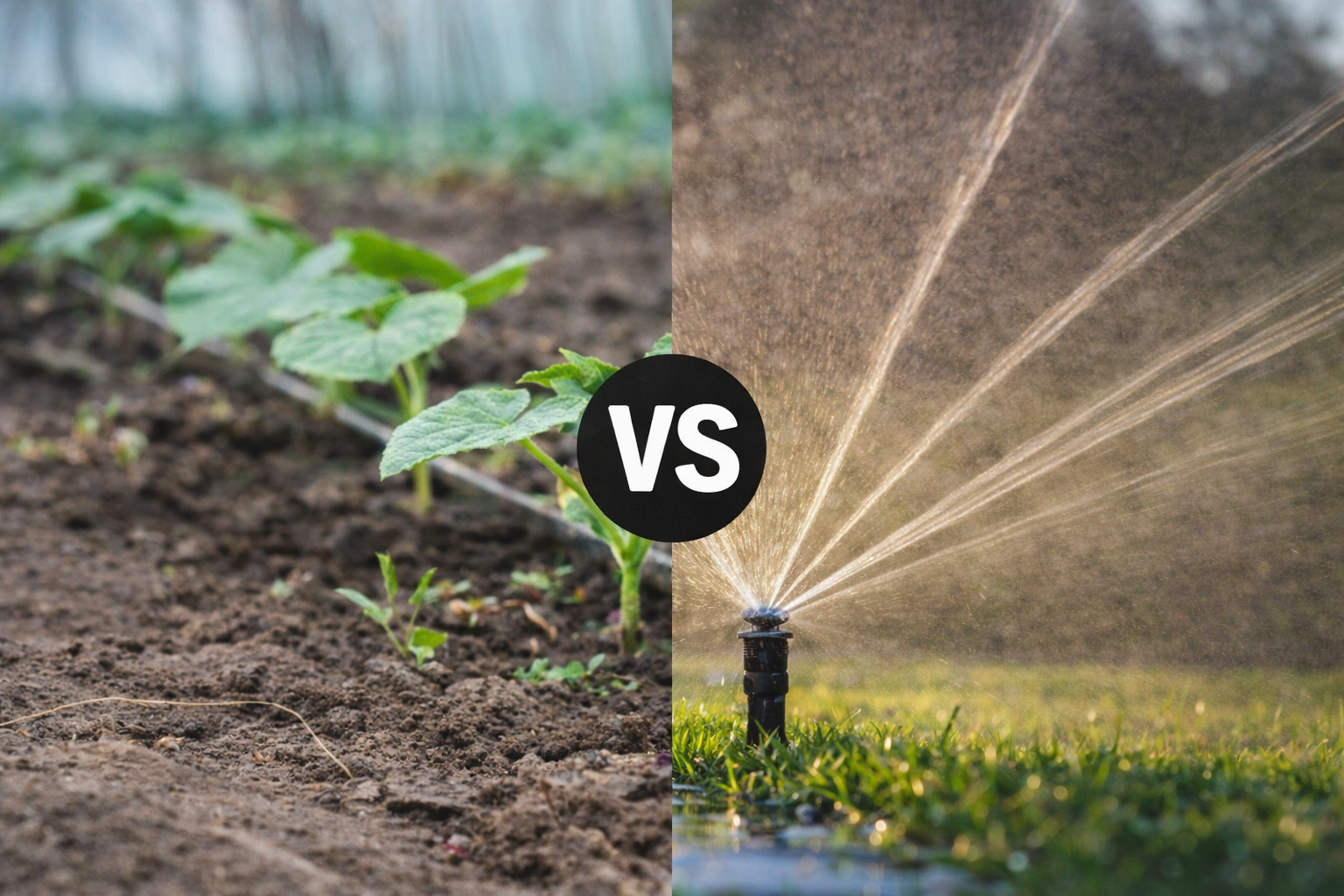
Drip irrigation is a localized watering system that delivers water directly to the root zone of plants through a network of valves, pipes, tubing, and emitters. Water is dispensed slowly and steadily as droplets, minimizing runoff and evaporation. This precision allows plants to absorb moisture directly, promoting healthier growth and reducing wastage.
What Is Sprinkler Irrigation?
Sprinkler irrigation distributes water through a system of pumps and pipes to sprinkler heads, which spray water uniformly across the field in the form of droplets. These droplets simulate natural rainfall and cover a broad area, supporting a range of crop types and field sizes. Sprinkler irrigation is often used where water supply is moderate and terrain allows for easy distribution.
Drip Irrigation Benefits for Water-Saving Farming
Drip irrigation is widely praised for its efficiency and capability to save water, especially in water-scarce areas. Here are some of the key drip irrigation benefits that contribute to water-saving farming:
1. Reduced Water Loss from Evaporation
Drip irrigation delivers water directly to the soil near plant roots, minimizing water exposure to the air. This significantly lowers evaporation losses compared to sprinkler systems, where droplets fall through the air and evaporate before reaching the soil.
2. Minimized Runoff and Deep Percolation
Water applied via drip irrigation is slow and localized, preventing overwatering and runoff. In contrast, sprinklers sometimes apply water faster than the ground can absorb, causing runoff that results in water wastage.
3. Efficient Nutrient Application
Fertilizers and nutrients can be applied through drip irrigation systems via fertigation. This process helps target nutrient delivery efficiently, reducing leaching and runoff that typically occur in sprinkler irrigation.
4. Decreased Weed Growth
Since water delivery is focused solely on the root zone of crops, surrounding soil remains drier, discouraging weed germination and growth. Sprinklers wet the entire field surface, often promoting weeds.
5. Adaptability to Uneven Terrain
Unlike sprinklers, drip irrigation maintains efficiency on sloped or uneven lands where water could pool or runoff otherwise.
6. Energy Savings
Less water used means less energy consumed for pumping and distributing irrigation water, making drip systems more sustainable and cost-effective over time.
Sprinkler Irrigation Comparison: Advantages and Limitations
While drip irrigation is ideal for water conservation, sprinkler irrigation has its own set of benefits and challenges:
– Advantages
– For large-scale crops like cereals and pastures, sprinklers efficiently cover extensive areas.
– Sprinkler systems tend to be easier and less expensive to install initially.
– Sprinklers aid in frost protection and can cool plants during hot weather.
– Limitations
– Higher water loss due to evaporation and wind drift.
– Less precise water application can lead to overwatering and disease prevalence.
– Water runoff may occur on uneven soils, reducing efficiency.
Drip Irrigation vs Sprinkler: Water Efficiency Comparison
To provide a clear side-by-side evaluation, here is a comparison table illustrating key factors influencing water savings between drip irrigation and sprinkler irrigation.
Drip Irrigation and Sprinkler Irrigation Comparison Table
| Comparison Factor | Drip Irrigation | Sprinkler Irrigation |
|---|---|---|
| Water Application Method | Direct, slow release at roots | Sprayed over a wide area like rainfall |
| Evaporation Loss | Minimal due to soil-level delivery | High evaporation, especially on windy/hot days |
| Runoff and Deep Percolation | Very low; controlled application rate | Moderate to high depending on soil absorption |
| Uniformity of Water Distribution | Very uniform at root zones | Uniform across field but affected by wind |
| Water Use Efficiency | High (up to 90% efficiency) | Moderate (60-75% efficiency) |
| Suitability for Different Crops | Best for row crops, trees, orchards | Ideal for lawns, pastures, and broad acre crops |
| Energy Consumption | Generally lower | Higher due to pumping and pressure requirements |
How Drip Irrigation Supports Sustainable Water-Saving Farming
By enabling precise water application and reducing waste, the drip irrigation benefits directly contribute to sustainable agriculture efforts:
– Lower Water Footprint: Farmers can irrigate crops with significantly less water, optimizing water resources in drought-prone regions.
– Increased Crop Yields: Efficient water use improves plant health and yield quality, thereby supporting food security.
– Reduced Soil Erosion: Gentle application avoids runoff and soil displacement, preserving soil health.
– Decreased Chemical Leaching: Better water control limits pesticide and fertilizer leaching into groundwater.
Practical Considerations When Choosing Between Drip and Sprinkler Systems
Though water-saving is paramount, other practical elements must be considered when selecting an irrigation system:
Installation Cost and Maintenance
– Drip systems typically have higher initial installation costs due to tubing and emitters but lower operating costs.
– Sprinkler systems are often less expensive upfront but may consume more water and energy over time.
Crop Type and Field Size
– Drip irrigation is ideal for high-value, row crops, orchards, and vineyards, especially on smaller or uneven plots.
– Sprinkler irrigation suits large open fields and crops that tolerate overhead watering.
Climate and Soil Conditions
– Hot, windy climates favor drip irrigation due to minimized evaporation.
– Uniform soils with good infiltration may allow effective sprinkler use.
FAQs About Drip Irrigation Benefits and Water-Saving Farming
Q1: How much water can drip irrigation save compared to traditional sprinkler systems?
Drip irrigation can save anywhere from 30% to 70% more water than sprinkler irrigation because it delivers water directly to the roots with minimal evaporation and runoff.
Q2: Is drip irrigation suitable for all types of crops?
While highly effective for row crops, orchards, and vegetables, drip irrigation may not be the best choice for grains or pastures where sprinkler or flood irrigation is more practical.
Q3: Does drip irrigation reduce weed growth?
Yes. Since water is only applied near plant roots, surrounding weed seeds are less likely to germinate due to lack of moisture.
Q4: Can sprinkler systems be optimized for better water savings?
Yes. Modern sprinkler technologies like low-angle nozzles and smart controllers can improve efficiency, but inherent evaporation and wind losses remain higher than drip systems.
Q5: What is the lifespan of a drip irrigation system?
With proper maintenance, drip systems can last 10 to 15 years or longer, though components like emitters might need periodic replacement.
Conclusion
When prioritizing water-saving farming, the drip irrigation benefits clearly stand out by conserving water more effectively than sprinkler irrigation. Its precision, minimal losses from evaporation and runoff, and ability to deliver nutrients efficiently make it the superior choice for many crops, particularly in regions facing water scarcity. Although sprinkler irrigation remains useful for certain crop types and larger fields, the drive toward sustainable agriculture points toward adopting drip irrigation to optimize water use and maintain healthy crop yields. By understanding and choosing the right irrigation method based on field conditions, climate, and crop requirements, farmers can secure both productivity and environmental sustainability.


